KEY HIGHLIGHTS
- Heavy makeup worn for long hours and removed incompletely can clog pores and trigger breakouts, a pattern sometimes called acne cosmetica.
- Late nights, stress, sweat and touching the face add to the problem during festival season.
- Painful, deep or recurring breakouts, and any that leave marks, should be assessed by a dermatologist rather than treated at home.
Dussehra, Navratri and the weeks before Diwali bring more makeup, more outings and fewer hours of sleep. A few days later, new pimples appear along the chin, jawline or forehead. The timing is rarely a coincidence.
Can festival makeup cause acne?
Yes, in some people. Heavy, occlusive or pore-clogging products worn for many hours, and not removed thoroughly, can block pores and set off breakouts. This is sometimes called acne cosmetica. Makeup is not the only cause, but during festival season it is often the one that tips the balance.
What else triggers breakouts at this time of year?
- Sweat and dirt. Warm venues, dust and crowds leave a layer of sweat and grime that mixes with makeup.
- Dirty brushes and sponges. Tools reused across several events carry oil and bacteria back onto the skin.
- Touching the face. Resting a hand on your cheek or chin transfers oil and bacteria.
- Short sleep and stress. Both can increase oil production and inflammation.
- Rich food. Some people notice flare-ups after very sugary or fried meals. The evidence is mixed, but it is worth observing your own pattern.
- New products for events. An unfamiliar primer or foundation is a common hidden trigger.
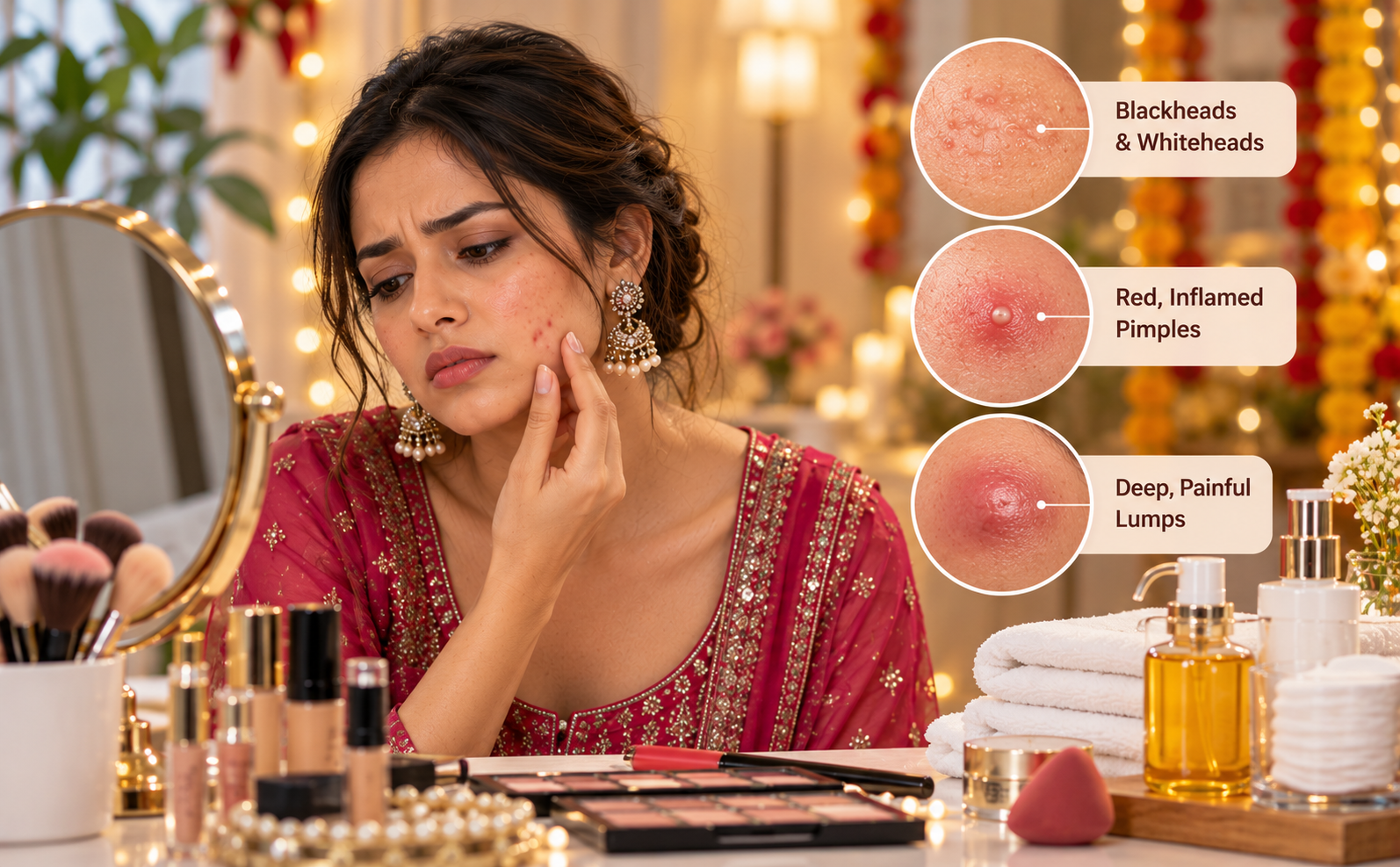
What type of breakout do you have?
| Type | What it looks like | Common festival trigger |
| Blackheads and whiteheads | Small bumps, usually without much redness. | Pores clogged by makeup, sweat and incomplete cleansing. |
| Red, inflamed pimples | Tender red bumps, sometimes with a white tip. | Oil, bacteria and friction from touching the face or from tools. |
| Deep, painful lumps | Large, sore lumps under the skin that last for weeks. | Often hormonal or more severe. These need a dermatologist. |
Hormonal and bacterial acne can look similar yet need different approaches. Our article on how a dermatologist tells hormonal and bacterial acne apart explains the difference.
What helps right now?
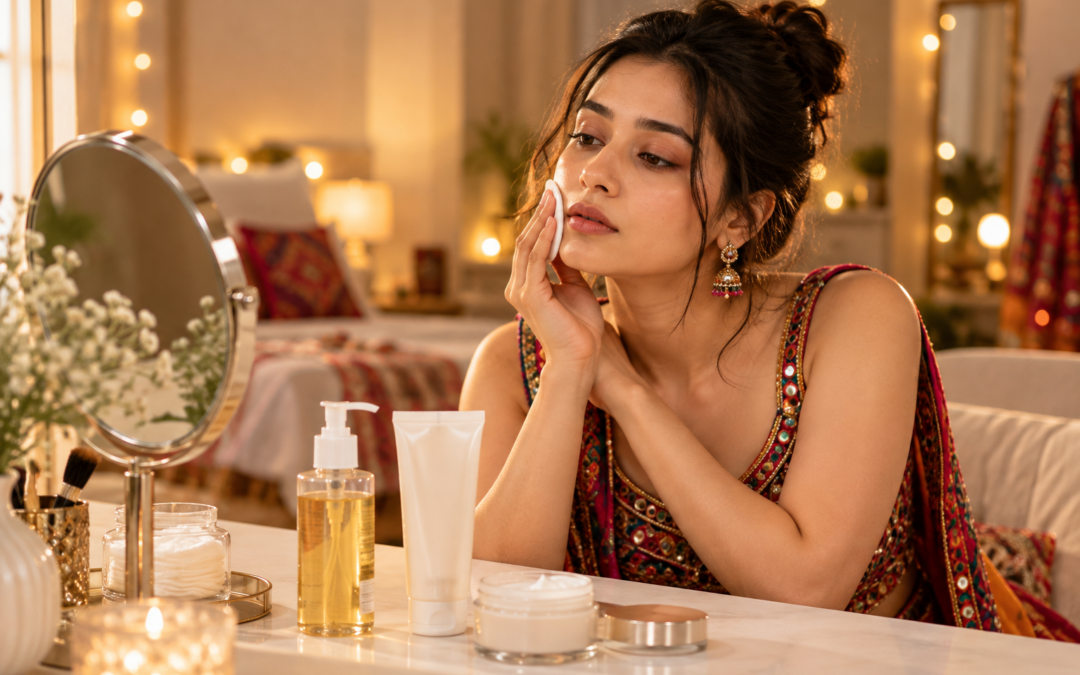
- Remove makeup completely every night. Use an oil or balm cleanser first, then a gentle water-based cleanser.
- Clean your tools. Wash brushes regularly and use a fresh sponge or clean it after each use.
- Moisturise. Choose a light, non-comedogenic moisturiser. Skin that is dry or stripped often produces more oil.
- Treat mild breakouts gently. Ingredients such as salicylic acid or benzoyl peroxide can help, used sparingly and one at a time.
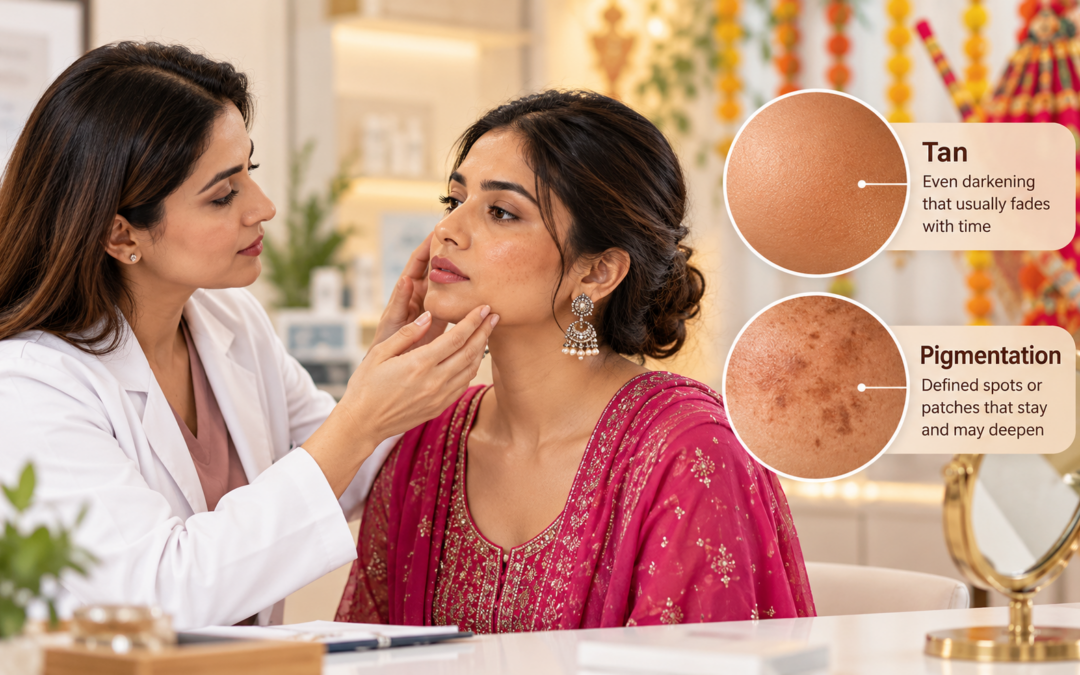
- Do not pick or squeeze. Picking prolongs healing and is the most common reason a pimple leaves a mark. See post-acne marks versus active acne.
- Avoid adding new strong actives while the skin is irritated.
When should you see a dermatologist?
Seek an assessment if breakouts are painful or deep, if they leave dark marks or dents, if they have not improved within two to three weeks, or if they return around the same time each month. Early treatment lowers the chance of lasting marks. If scars have already formed, read Acne Scars 101, and if you are wondering whether treatment is possible during a flare, see whether it is safe to treat scars while you still have breakouts.
Which clinic treatments can help?
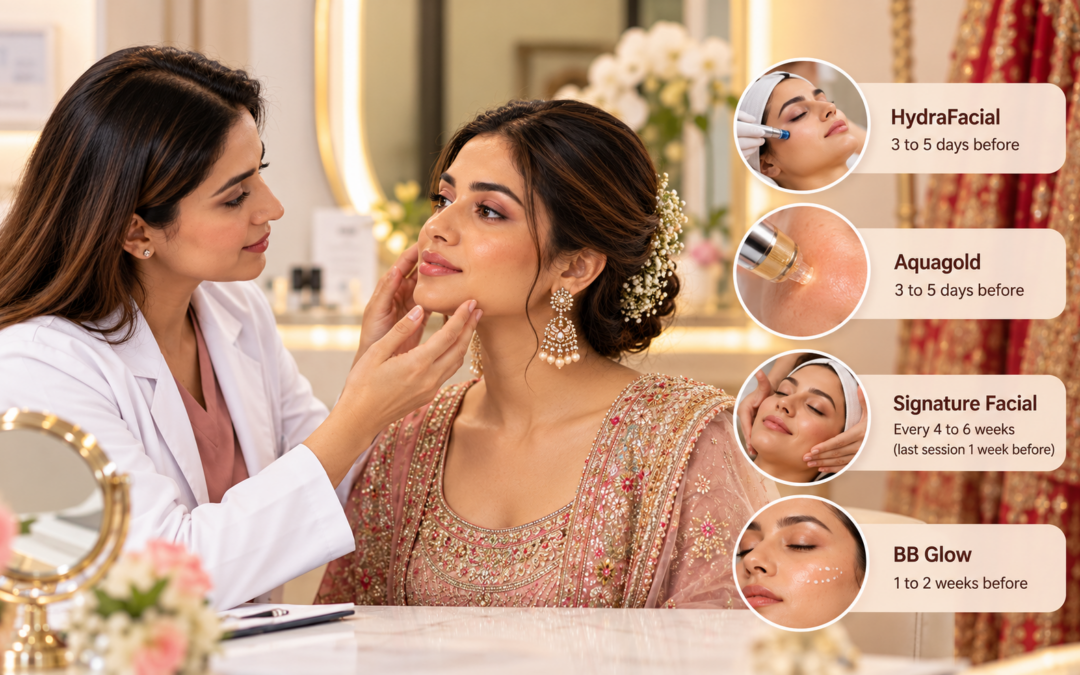
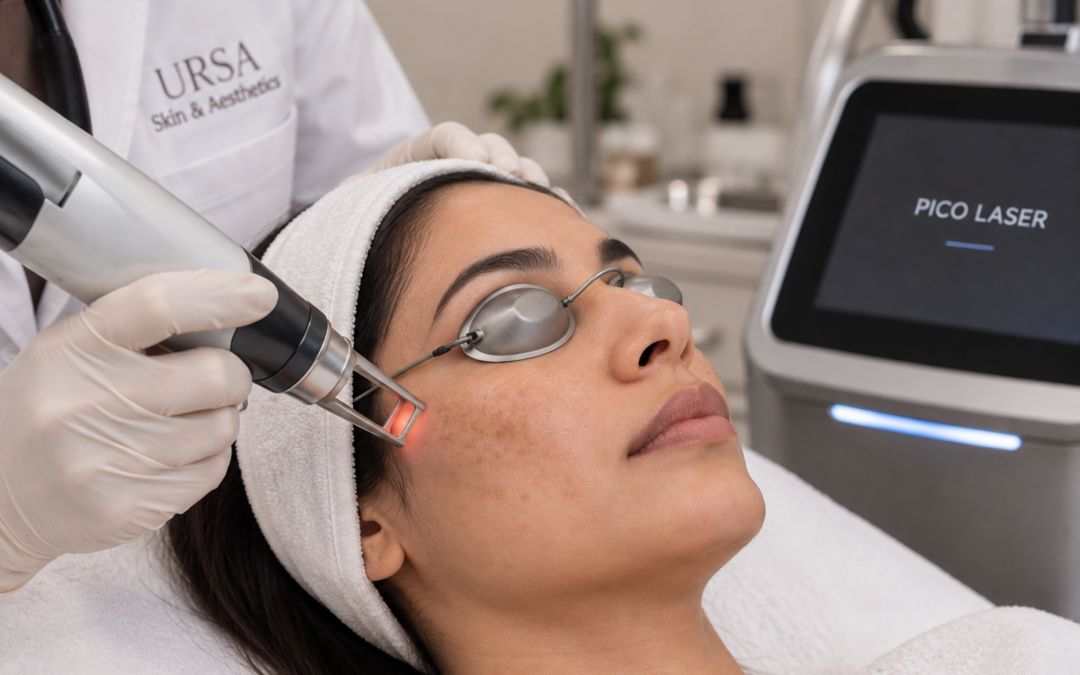
After assessment, a dermatologist may suggest a treatment to clear congestion and calm the skin. HydraFacial cleanses and extracts impurities (see HydraFacial for acne and pigmentation), a Carbon Peel Facial targets oil and pores, and a chemical peel can address congestion and surface marks. Each is chosen according to your skin, and none is advised during a heavily inflamed flare without a dermatologist’s guidance.
Frequently asked questions
Q1. Will the pimples go away on their own?
Mild ones often settle within a week or two. Deeper breakouts last longer, and picking extends the time and increases the risk of marks.
Q2. Can I wear makeup while I am breaking out?
Yes, using light, non-comedogenic products and removing them thoroughly each night.
Q3. Why do pimples keep appearing on my chin and jawline?
This area is often linked to hormonal changes and stress, although makeup and touching the face also contribute.
Q4. Is it safe to have a facial while I have pimples?
It depends on how inflamed the skin is. Extractions and peels should be decided by a dermatologist. Avoid squeezing by an untrained person.
Individual results vary, and a consultation is the most reliable way to confirm what suits your skin. To speak with a dermatologist, book a consultation at either URSA clinic in Gurgaon.