

KEY HIGHLIGHTS
- Losing 50 to 100 hairs a day is typical, and a temporary rise after stress, illness, a change in diet or a disrupted routine is common.
- Stress-related shedding usually appears about two to three months after the trigger, so what you see now may reflect events from the monsoon or summer rather than the festival itself.
- Hair fall that continues for months, comes with visible thinning or bald patches, or brings scalp symptoms should be assessed by a dermatologist.
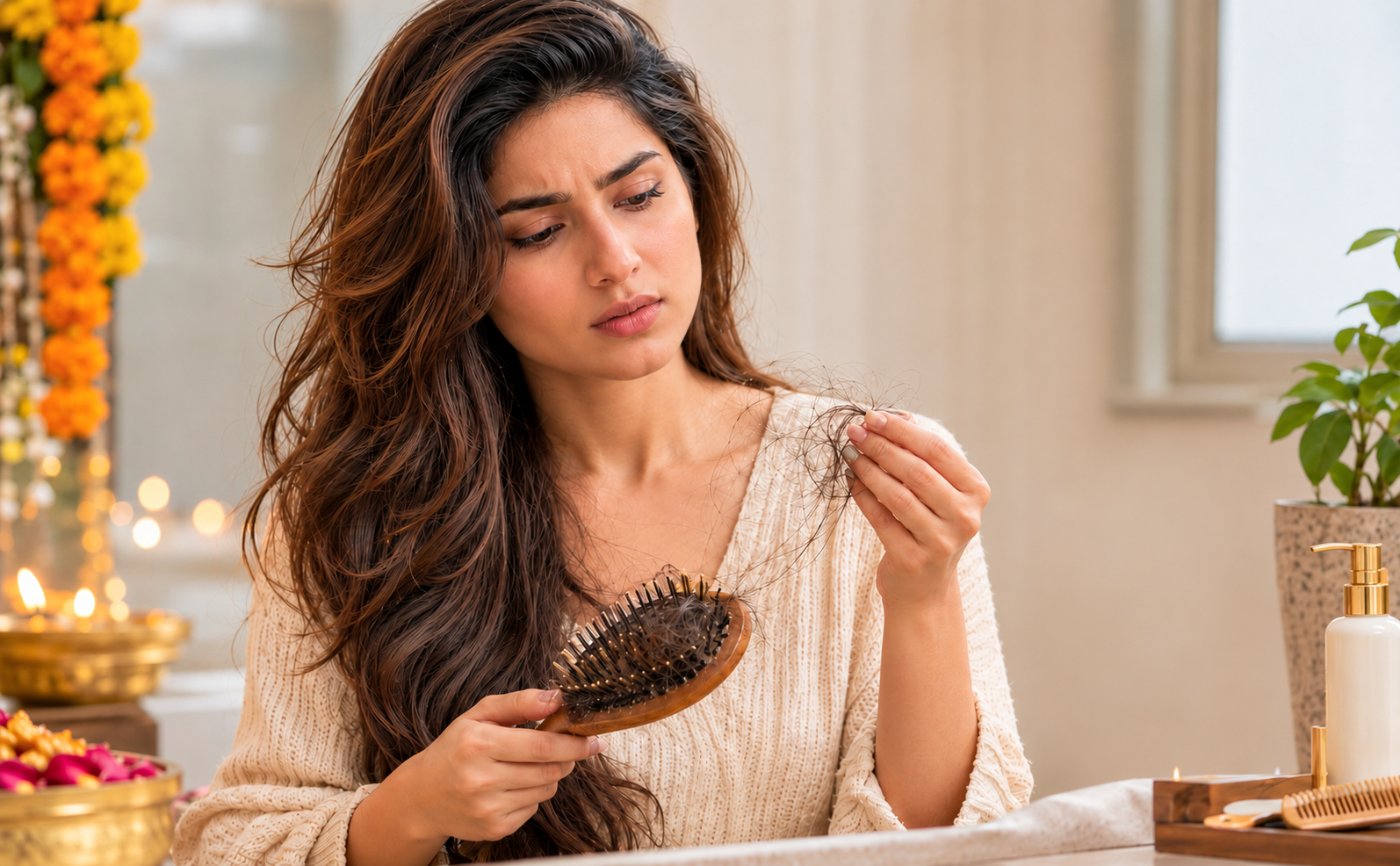
A rise in hair fall after a busy, tiring season is common and often temporary, but it is not always the festival’s fault. The most frequent pattern, known as telogen effluvium, appears roughly two to three months after a trigger such as stress, illness, fever, crash dieting or a disrupted routine, and it usually settles over the following months once the trigger has passed. Shedding that persists, thins the hair visibly or arrives in patches deserves a closer look.
How much hair fall is normal?
Most people lose roughly 50 to 100 strands a day, and more on days when the hair is washed or brushed. Our earlier guide to monsoon hair fall covers the same threshold. The pattern matters more than the count: a steady increase over several weeks, or a visibly thinner ponytail, is the signal to act.
What could be behind it?
| Pattern | Possible cause | Next step |
| Even shedding all over, seen on the pillow and in the brush | Temporary shedding after stress, illness, fever, weight change or a change in diet. | Reduce the trigger and eat enough protein. Review if it continues beyond two to three months. |
| A widening parting, or gradual thinning at the crown or temples | Pattern hair loss, which is often genetic and progressive. | See a dermatologist early, because earlier treatment keeps more hair. |
| Round, smooth bald patches | An autoimmune pattern called alopecia areata, among other causes. | See a dermatologist promptly. |
| Itchy, flaky or tender scalp with shedding | Dandruff, seborrheic dermatitis or a fungal scalp problem. | Treat the scalp condition. The shedding often improves. |
| Broken strands rather than strands with a root | Breakage from heat styling, tight hairstyles or chemical treatments. | Reduce heat and tension, and use gentle products. |
Can diet and stress really cause hair fall?
Yes. Low iron, low vitamin D, a low protein intake, thyroid problems and crash diets are all well-recognised contributors, and so is significant stress. Do not start supplements blindly. Some, such as high-dose vitamin A and selenium, can themselves cause hair loss, and biotin can interfere with some blood tests. If shedding persists, a dermatologist can advise which tests are worthwhile, such as iron stores (ferritin), vitamin D and thyroid function.
- Eat regular meals that include protein, and avoid crash diets.
- Go easy on heat styling and tight hairstyles.
- Protect your sleep and manage stress where you can.
- Treat dandruff early, since an unhealthy scalp makes shedding worse.
Which treatments help when it is more than temporary?
Treatment depends on the cause, so diagnosis comes first. For established thinning, URSA offers PRP for hair loss, which uses growth factors from your own blood, and GFC therapy, which uses a more concentrated preparation of them. The clinic’s pages describe both as non-surgical with minimal downtime. Keravive scalp treatment focuses on scalp health, cleansing and nourishing the scalp. These support the follicles but do not replace correcting an underlying cause such as iron deficiency. For a comparison, read PRP versus GFC, or the older guide to effective hair fall treatments.
When should you see a dermatologist?
- Shedding that has not settled after two to three months.
- A widening parting, visible thinning or bald patches.
- An itchy, flaky or painful scalp alongside the hair fall.
- Hair fall together with fatigue, weight change or irregular periods, which can point to a thyroid or hormonal cause.
Our checklist for choosing a dermatologist in Gurgaon explains what to look for in an assessment.
Frequently asked questions
Q1. Will my hair grow back after stress-related shedding?
In most cases, yes. Temporary shedding usually settles over the following months once the trigger has passed, and regrowth takes further time to become visible. If it does not settle, have it assessed.
Q2. Do hair oils stop hair fall?
Oiling can make the scalp and hair feel conditioned and may reduce breakage, but there is little evidence that oils stop shedding or regrow hair. A clean, healthy scalp and treating the cause matter more.
Q3. How do I find a dermatologist near me for hair fall?
Look for a dermatologist-led clinic that examines the scalp, asks about diet, stress, illness and family history, and explains the likely cause before it suggests any treatment.
Q4. Is PRP painful?
The clinic’s PRP page describes the procedure as generally not painful, with a slight prick on the scalp, and minimal downtime.
Q5. How long before I see results from PRP or GFC?
The clinic’s pages describe gradual results that build over a course of sessions, often across a few months. Patience is needed, and a dermatologist can set realistic expectations after assessing your scalp.
Individual results vary, and a consultation is the most reliable way to confirm what suits your skin. To speak with a dermatologist, book a consultation at either URSA clinic in Gurgaon.