

KEY HIGHLIGHTS
| • Some increase in hair fall during monsoon is genuinely normal — humidity and scalp changes are common triggers. • Losing more than roughly 100-150 strands a day, or noticing thinning patches, is a signal worth checking. • Monsoon hair fall that doesn’t settle once the season changes is the clearest reason to see a dermatologist. |
Short answer: some increase is normal, but there’s a threshold past which it stops being ‘just the season’ and starts being worth a dermatologist’s attention.
Why Monsoon Triggers More Shedding
Humidity affects the scalp the same way it affects skin — increased moisture and sweat can lead to a build-up on the scalp that weakens hair follicles over time. Fungal or bacterial scalp issues are also more common during monsoon due to the damp conditions, and both can contribute to temporarily higher shedding.
What Counts as ‘Normal’ Hair Fall
On an average day, losing somewhere between 50 and 100 strands is considered typical, and this number can climb a bit during monsoon without being a cause for concern. The distinction isn’t really about hitting an exact number — it’s about pattern and duration.
Signs It’s More Than Seasonal Shedding
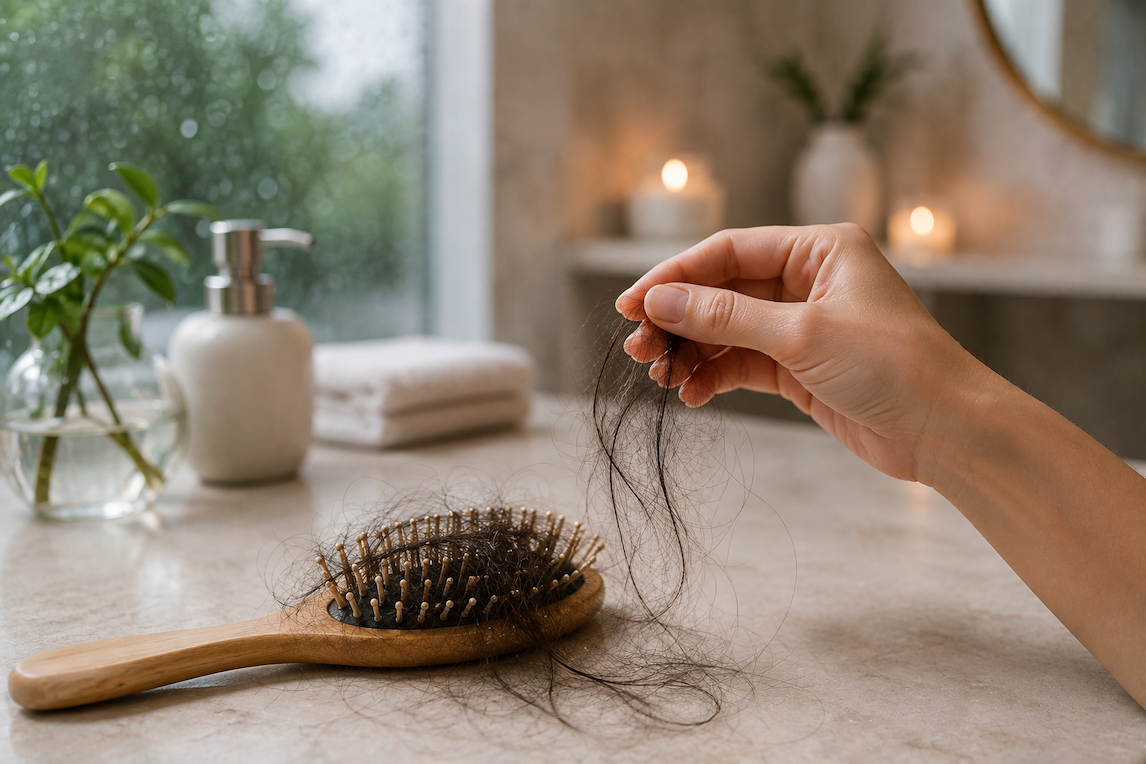
- Noticeably more hair on your pillow, in the shower drain, or in your brush than usual — consistently, not just occasionally.
- Visible thinning at the part line or temples, rather than just more loose strands.
- Hair fall that continues well after monsoon ends, rather than settling once humidity drops.
- Scalp symptoms alongside the shedding — itching, flaking, or tenderness.
What to Do About It
For genuinely seasonal shedding, gentle scalp care — keeping the scalp clean and dry, avoiding tight, damp hairstyles, and using a mild, non-stripping shampoo — is usually enough. If shedding persists past the season or comes with visible thinning, that’s the point to get it checked rather than waiting it out, since underlying causes like hormonal shifts, nutritional deficiencies, or early-stage hair loss conditions can look identical to seasonal shedding at first.
When to See a Dermatologist
A dermatologist can assess whether what you’re experiencing is seasonal or something that needs treatment — options range from targeted scalp treatments to PRP or GFC therapy for more established hair loss. [Link to: PRP for Hair Loss / GFC Therapy pages]
Monsoon hair fall isn’t something to panic over, but it also isn’t something to ignore indefinitely. If it hasn’t settled by the time the season changes, that’s your answer.