
KEY HIGHLIGHTS
- PRP and GFC are both derived from your own blood but processed and used differently.
- GFC is generally considered gentler and better tolerated; PRP has a longer track record and more research behind it.
- Neither is universally ‘better’ — the right choice depends on your hair loss pattern and skin sensitivity.
PRP (Platelet-Rich Plasma) and GFC (Growth Factor Concentrate) are two of the most commonly recommended treatments for hair loss, and both are derived from a patient’s own blood — which is where the similarities largely end. Here’s how they actually differ, and how a dermatologist decides between them.
How PRP Works
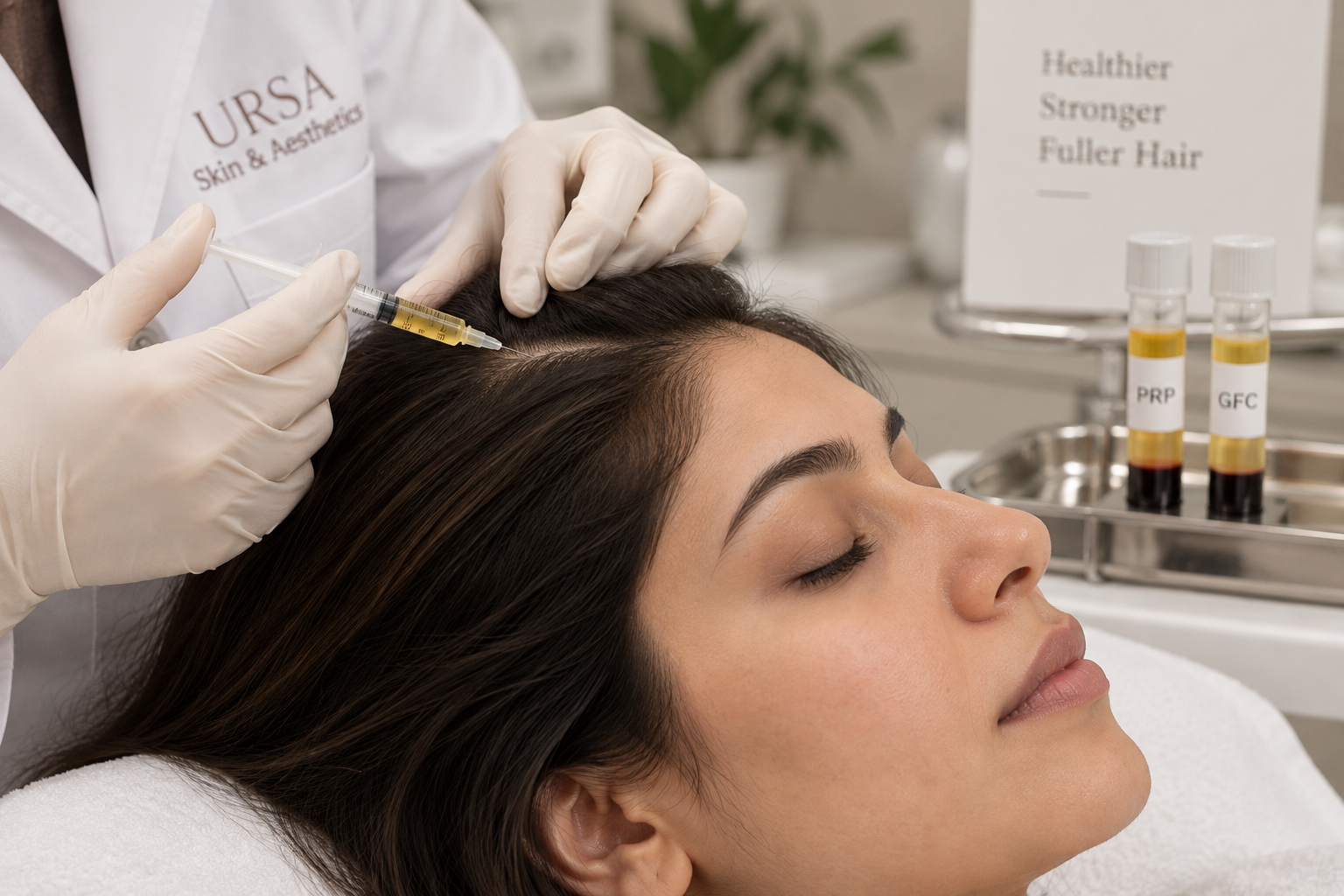
PRP involves drawing a small amount of blood, spinning it in a centrifuge to concentrate the platelets, and injecting that platelet-rich plasma into the scalp. Platelets release growth factors that stimulate hair follicles, and PRP has been used in hair restoration for over a decade, with a substantial body of research behind it.
How GFC Works
GFC takes the process further — after the initial centrifuge step, the plasma is processed again to isolate and concentrate specific growth factors, removing red and white blood cells from the final injection. The result is a more purified, growth-factor-concentrated solution, which many patients find causes less scalp irritation and discomfort during injection.
PRP vs GFC — Quick Comparison
| PRP | GFC | |
| Source | Patient’s own blood | Patient’s own blood, further processed |
| Processing | Single centrifuge spin | Additional processing to isolate growth factors |
| Comfort | Can cause more scalp sensitivity | Generally gentler, less irritation |
| Track record | Longer-established, more research | Newer, growing evidence base |
Which One Is Right for You?
For patients with sensitive scalps or lower pain tolerance, GFC is often preferred for comfort. For more established or advanced hair loss, some dermatologists lean on PRP’s longer track record. In practice, both are used successfully depending on the individual case — and some treatment plans use one to start and switch to the other based on response.
What Determines the Choice at URSA
The decision comes down to your specific pattern of hair loss, scalp condition, and comfort preference, assessed during a consultation — not a default “one is better” answer. [Link to: PRP for Hair Loss page] [Link to: GFC Therapy page]
Neither treatment works instantly — both typically require a series of sessions over several months, with results building gradually as follicles respond. If you’re comparing the two for your own hair loss, the more useful question isn’t which is “better” in the abstract, but which is better suited to your scalp and your pattern of loss.