
KEY HIGHLIGHTS
| • Acne scars fall into four main categories, and they don’t all respond to the same treatment. • Ice pick, boxcar, and rolling scars are textural; post-acne marks are pigmentation, not scarring. • Most patients have a mix of scar types, which is why a single ‘best’ treatment rarely exists. |
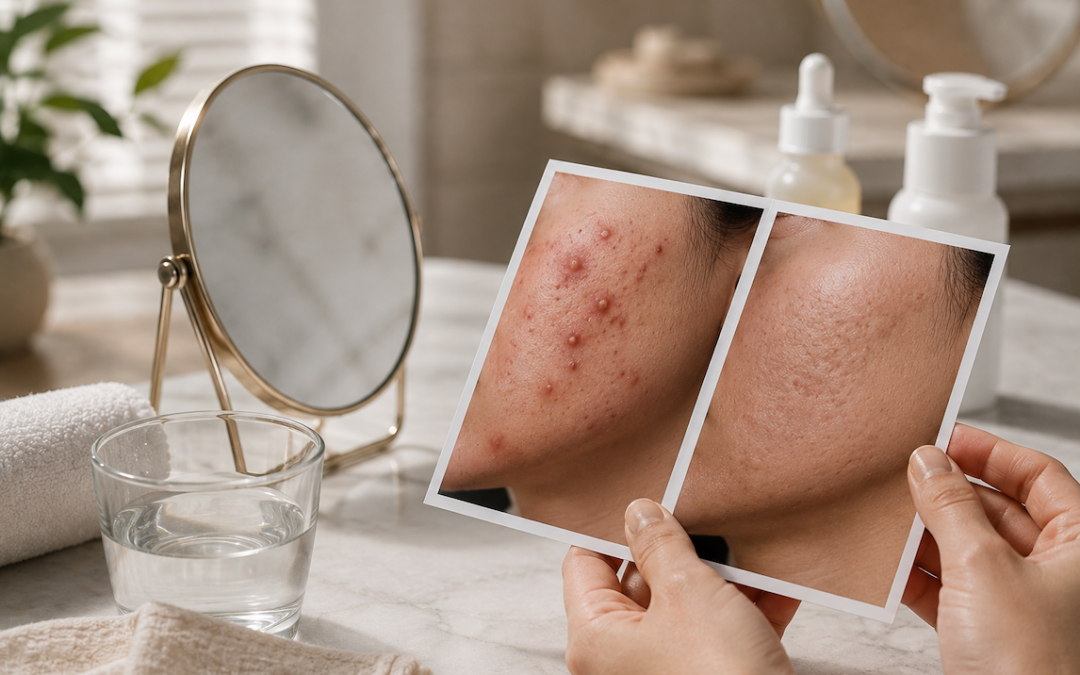
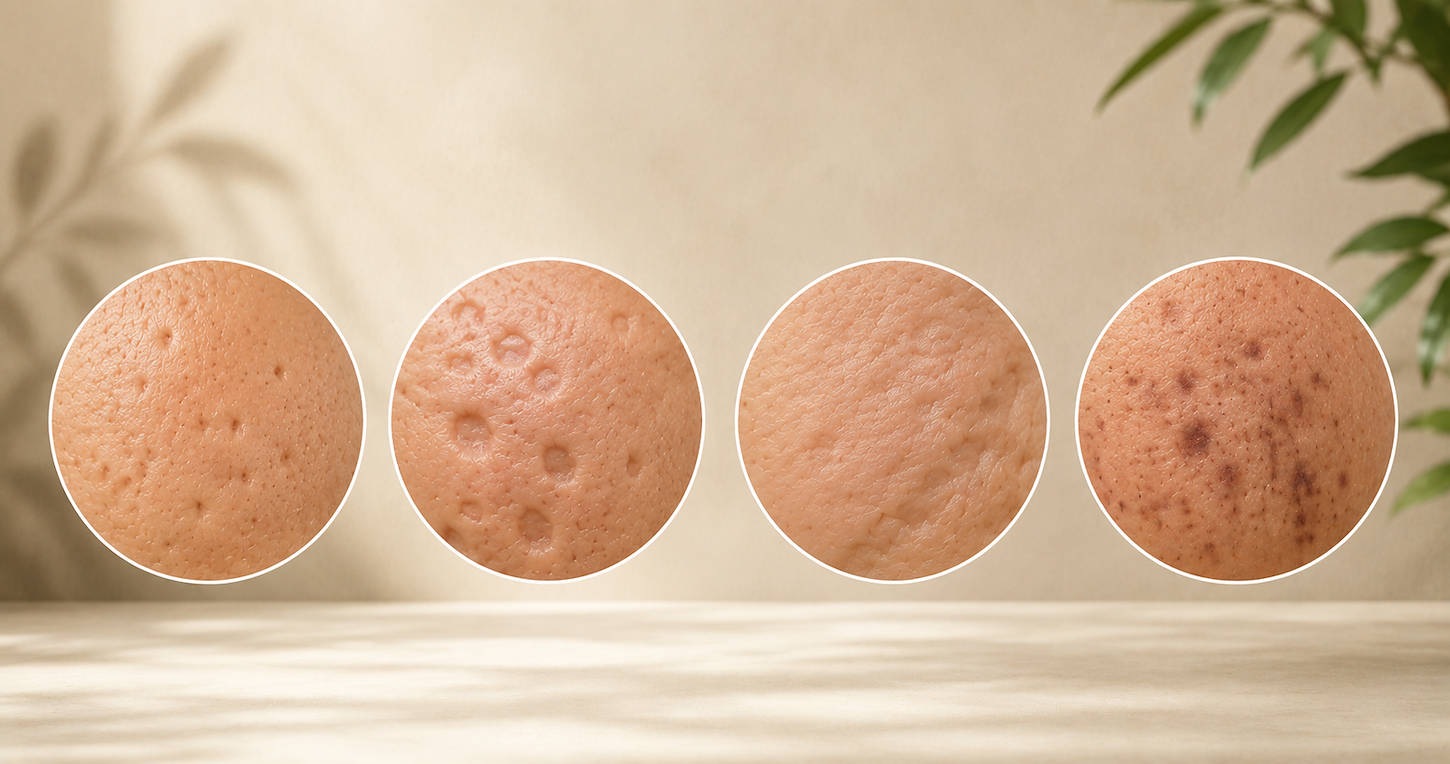
Not every mark left behind by acne is the same kind of scar — and treating them as if they are is one of the most common reasons acne scar treatment disappoints. Dermatology generally groups acne scarring into four categories, three of which are textural (actual changes in the skin’s surface) and one of which is purely pigmentation.
1. Ice Pick Scars
Narrow, deep, and sharply defined — ice pick scars look almost like a small puncture in the skin. They’re among the hardest to treat because of their depth, and usually respond best to a combination approach: laser resurfacing paired with a technique that lifts the base of the scar.
2. Boxcar Scars
Boxcar scars are broader and have defined, box-like edges with a flatter base than ice pick scars — think of them as shallow craters. They respond well to treatments that encourage collagen remodeling across a wider area, such as microneedling or fractional laser.
3. Rolling Scars
Rolling scars have a wave-like texture with no sharp edges, caused by fibrous bands pulling the skin down from beneath. They typically respond best to treatments that address that underlying tethering combined with resurfacing on top — microneedling and dermaroller sessions are commonly used here.
4. Post-Inflammatory Hyperpigmentation (PIH)
This one isn’t textural at all — it’s a flat, discolored mark left behind after acne heals, and it’s a pigmentation issue rather than a scarring issue. That distinction matters: treatments built for textural scars won’t necessarily fade a pigmented mark, which usually responds better to chemical peels, Pico laser, or Q-Switch toning.
Acne Scar Types at a Glance
| Scar Type | Texture | Commonly Used Treatments |
| Ice pick | Deep, narrow puncture | Laser resurfacing, combination approach |
| Boxcar | Shallow, box-like crater | Microneedling, fractional laser |
| Rolling | Wave-like, no sharp edge | Microneedling, dermaroller |
| PIH (marks, not scars) | Flat discoloration | Chemical peel, Pico laser, Q-Switch |
Why Most People Need a Combination Plan
Very few patients have just one type of scarring — most acne-prone skin ends up with a mix of textural scarring and pigmented marks. That’s why a single treatment rarely does the whole job, and why an assessment that identifies exactly which types you have matters more than picking a treatment off a list. [Link to: Acne Scar Treatment page]
If you’ve tried one treatment and seen partial results, it may simply be that it was addressing only one type of scarring you have. A dermatologist consultation can map out a plan that covers all of them.