
KEY HIGHLIGHTS
- Post-acne marks are pigmentation left behind after a pimple heals — not active acne itself.
- Treating a healed mark like it’s still active acne can slow down fading and irritate the skin further.
- The right treatment for marks depends on whether they’re red, brown, or textured.
It’s easy to lump every mark on acne-prone skin into one category, but a healed, discolored mark and an active, inflamed pimple are two very different things — and using acne-focused treatment on a mark that’s already healed usually does more harm than good.
What Counts as Active Acne
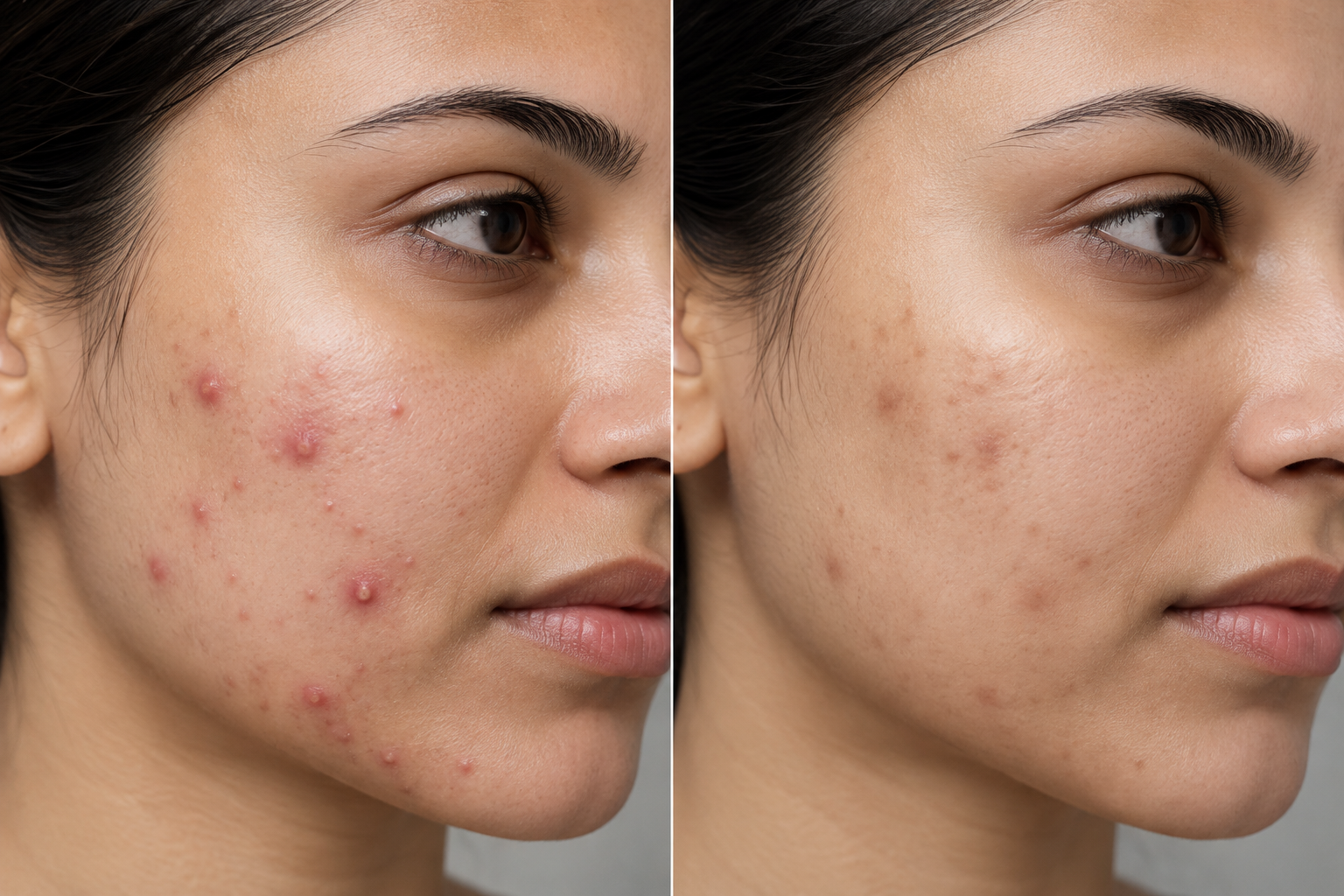
Active acne is inflamed: it’s raised, often tender or painful, and typically has visible whiteheads, redness, or swelling. This is the stage where acne-focused treatments — targeted actives, sometimes prescription treatment — are appropriate, because there’s active inflammation and bacteria to address.
What Counts as a Post-Acne Mark
Once a pimple has healed, it can leave behind a flat mark — red or purplish in lighter skin tones, brown in deeper skin tones. This is post-inflammatory hyperpigmentation (or erythema, for red marks), and importantly, it’s not active acne anymore. There’s no bacteria or inflammation left to treat; what’s left is pigmentation.
Why Treating Them the Same Way Backfires
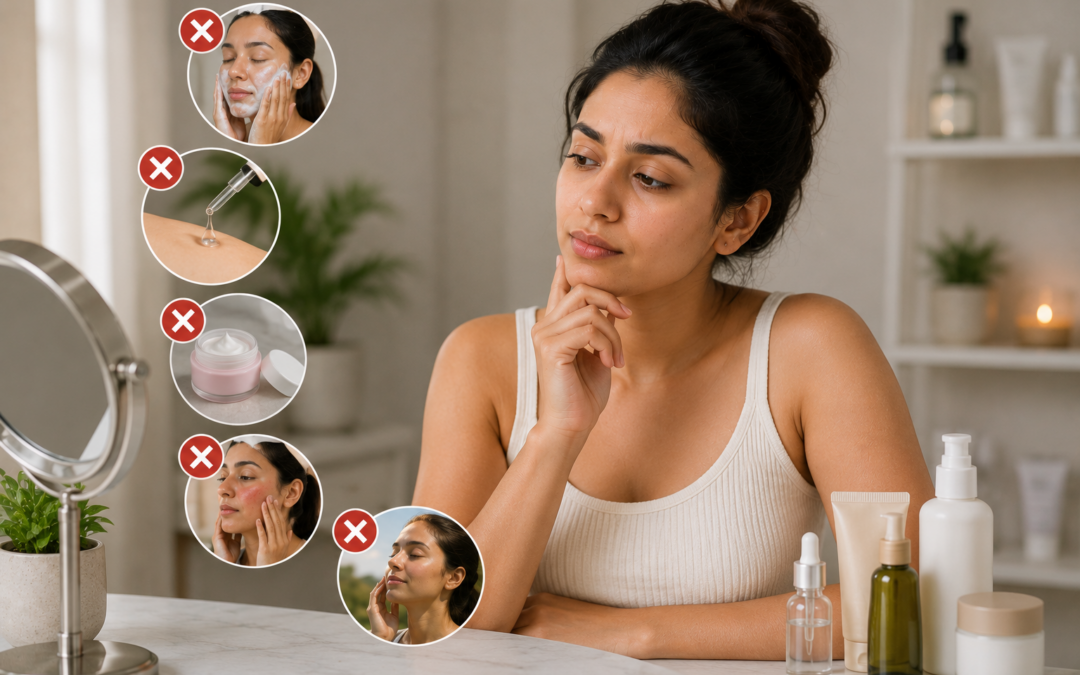
Acne-focused actives — the kind meant to dry out active breakouts — can be unnecessarily harsh on skin that’s already healed, causing irritation that can actually prolong the mark rather than fade it. Meanwhile, pigmentation-focused treatments applied to genuinely active acne can irritate inflamed skin and worsen a breakout.
Active Acne vs Post-Acne Marks — Quick Reference
| Active Acne | Post-Acne Mark | |
| Appearance | Raised, inflamed, often with whitehead | Flat, discolored |
| Feel | Often tender or painful | Usually painless |
| What’s actually happening | Active inflammation / bacteria | Pigmentation left after healing |
| Right approach | Acne-focused treatment | Pigmentation-focused treatment |
Treating Marks the Right Way
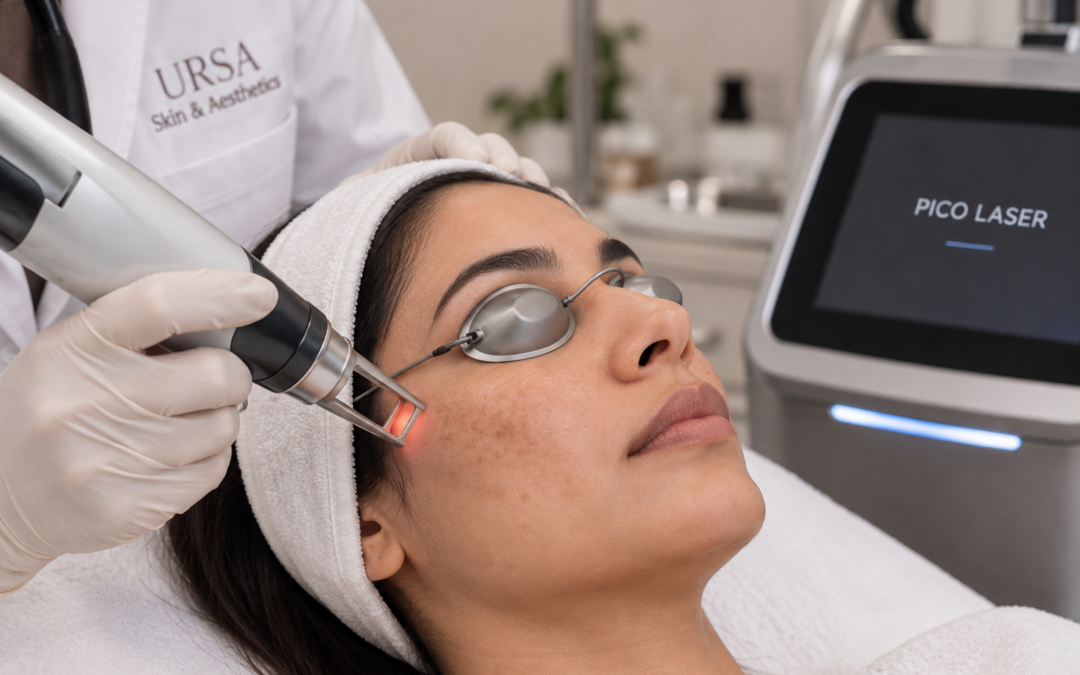
Once a mark is confirmed as post-inflammatory rather than active, treatments like chemical peels, Pico laser, or Q-Switch toning are typically far more effective at fading it than continuing an acne-focused routine. [Link to: Pigmentation Treatment page] [Link to: Acne Scar Treatment page]
When You Have Both at Once
Most acne-prone skin has a mix — some active breakouts, some healed marks — which is exactly why a single over-the-counter product rarely addresses everything happening on the skin at once. A dermatologist can map out which areas need acne treatment and which need pigmentation treatment, rather than applying one approach across the board.
If your skin looks like it’s “still breaking out” but nothing seems to help, it’s worth checking whether what you’re seeing is actually active acne — or marks from acne that’s already gone.