KEY HIGHLIGHTS
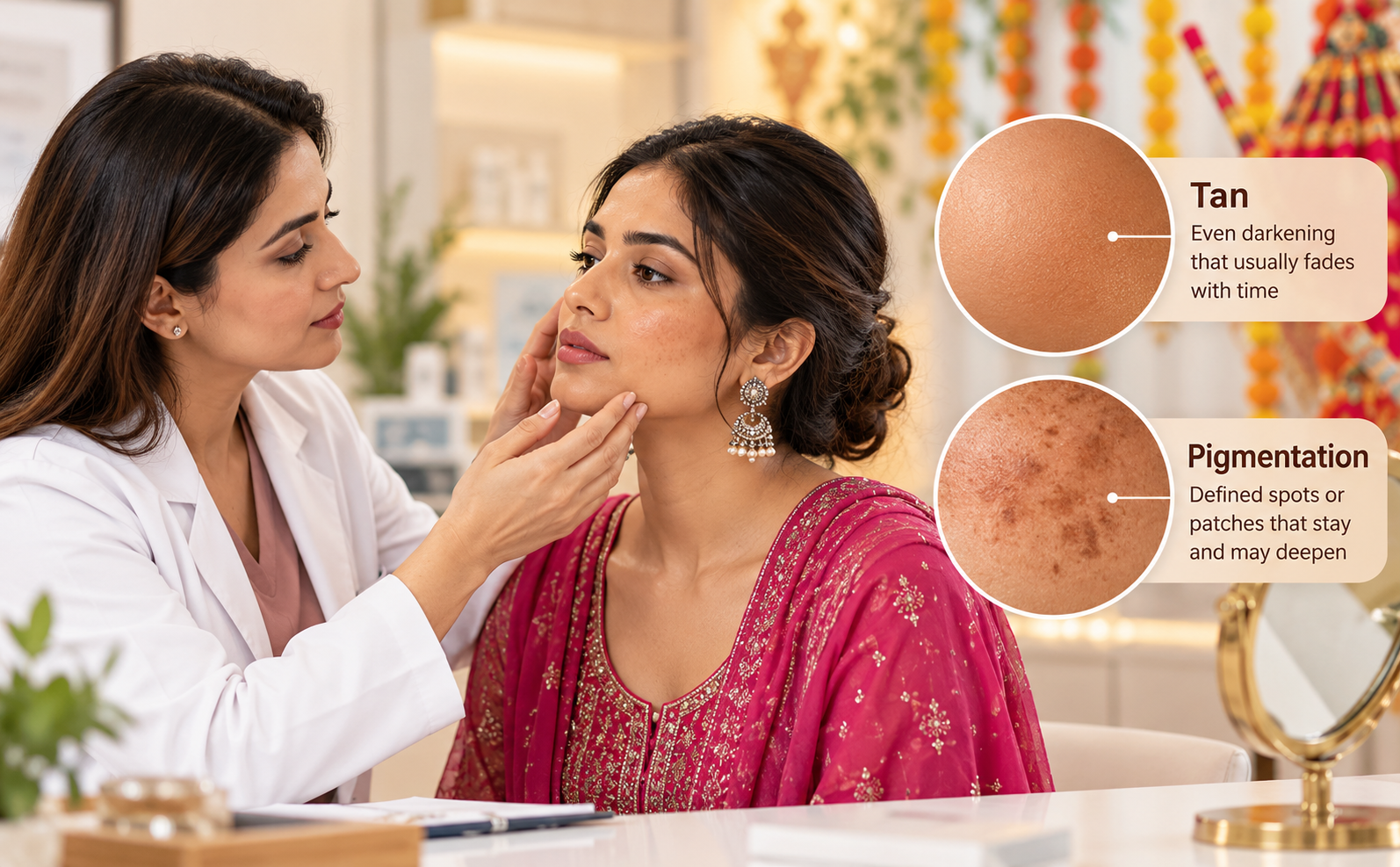
- A tan is an even darkening of sun-exposed skin that usually fades over several weeks once sun exposure is reduced.
- Pigmentation appears as defined spots or patches that stay, or deepen, after the sun exposure stops.
- If a mark has not lightened after six to eight weeks of consistent sun protection, it is worth having it assessed.
October days in North India can feel mild, but the UV radiation is still strong enough to darken skin. After days of outdoor rituals, rooftop gatherings and daytime shopping, many people notice a darker face or hands and wonder whether it is a simple tan or the start of pigmentation. The two are related but not the same, and the difference decides whether you wait or treat.
What is the difference between a tan and pigmentation?
A tan is a temporary, even darkening of skin that has been exposed to the sun, and it fades as the skin renews itself. Pigmentation is a lasting concentration of pigment in particular spots or patches, and it does not fade reliably without treatment.
| Feature | Tan | Pigmentation (sun spots, melasma, post-acne marks) |
| Pattern | Even darkening across sun-exposed areas, often with a visible tan line. | Defined spots or patches in one area. Melasma is usually symmetrical across the cheeks, forehead or upper lip. |
| How it develops | Within days of sun exposure. | Gradually over time, or after acne or irritation heals. |
| What happens next | Fades over several weeks as the skin renews, provided sun exposure is kept low. | Persists, and often darkens further with each round of sun exposure. |
| Best response | Daily sunscreen and gentle hydration. | Dermatologist assessment and a treatment plan matched to the type. |
How long does a tan take to fade?
Most tans lighten gradually over several weeks as the outer layer of skin sheds and renews. The process is slower if you keep getting sun, if the tan was deep, or if you have been tanned repeatedly. Daily sunscreen helps the fade along and prevents the tan from turning into something longer lasting.
How can you tell it is pigmentation and not a tan?
Look for the following signs. Any one of them is a reason to book an assessment.
- The darkness has not improved after six to eight weeks of consistent sun protection.
- The marks have defined edges, or appear as spots or patches rather than an overall darkening.
- Symmetrical patches appear on the cheeks, forehead or upper lip. This pattern is typical of melasma, which our guide on melasma versus sun spots explains in detail.
- Dark marks remain where pimples have healed, which is covered in our article on post-acne marks.
- The area darkens again each time you spend time in the sun.
A single dark spot that is changing in size, shape or colour, has irregular edges, itches or bleeds should be examined by a dermatologist promptly. This is a medical question, not a cosmetic one.
What can you do at home this week?
- Apply broad-spectrum sunscreen of SPF 30 or higher every morning and reapply if you are outdoors for long periods.
- Use shade, a hat or a dupatta during the middle of the day.
- Cleanse gently and moisturise. Friction from scrubbing can worsen dark marks.
- Do not apply lemon juice, bleach or similar home remedies. They can irritate the skin and may deepen pigmentation, particularly in medium to deeper skin tones. Our article on common skincare myths covers more of these.
Which treatments help if it is pigmentation?
The right choice depends on the type and depth of the pigmentation, which is confirmed during a skin assessment rather than chosen from a menu. As a general guide:
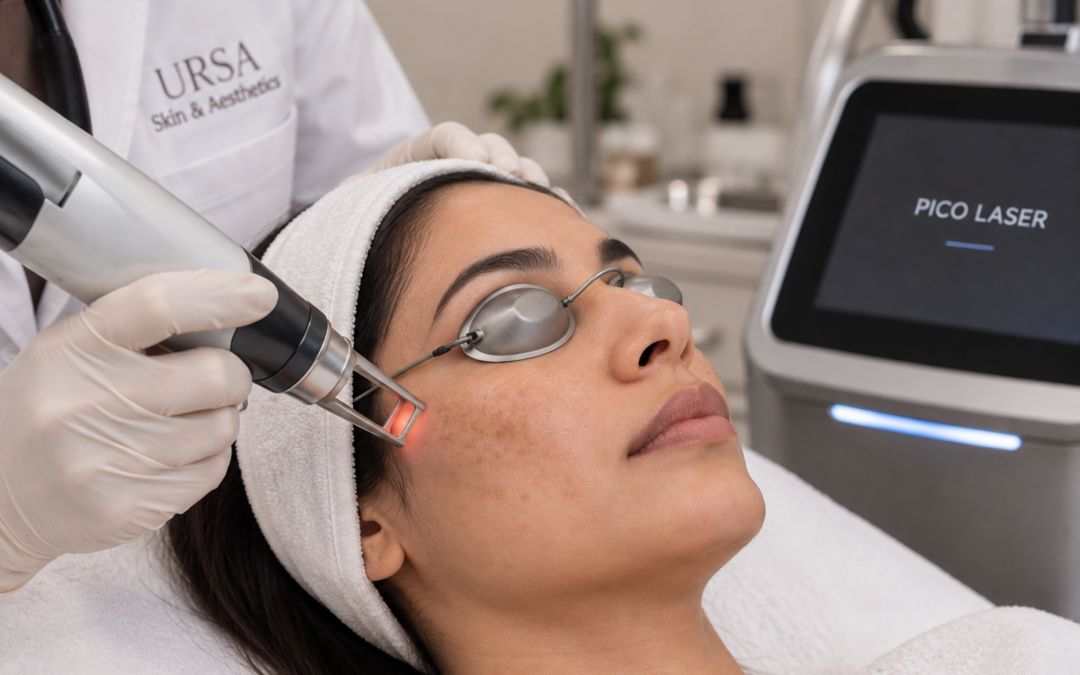
- Q-Switch laser toning and Pico laser are used for sun spots and stubborn pigment. Our comparison of Pico and Q-Switch lasers explains how they differ.
- Cosmelan is typically considered for melasma, and a series of chemical peels can help with overall tone. See Cosmelan versus chemical peel for a side-by-side view.
Pigmentation treatment takes weeks rather than days. For realistic expectations, read how long pigmentation takes to fade, and for what determines whether it returns, see whether pigmentation comes back after laser.
Frequently asked questions
Q1. Can sunscreen alone fix pigmentation?
Sunscreen stops existing pigmentation from deepening and protects the results of treatment, but it does not remove pigment that is already established.
Q2. Will pigmentation fade on its own when winter arrives?
Some patches lighten slightly with less sun, but melasma in particular tends to return, and sun spots usually remain until they are treated.
Q3.Is it worth treating pigmentation now rather than waiting?
Starting earlier gives treatment more time to work before the wedding season and the New Year, because most pigmentation plans need several sessions.
Individual results vary, and a consultation is the most reliable way to confirm what suits your skin. To speak with a dermatologist, book a consultation at either URSA clinic in Gurgaon.