KEY HIGHLIGHTS
- Flash, overhead lighting, makeup that settles into fine lines and short sleep all make under-eye darkness look stronger in photographs.
- Dark circles have different causes (pigment, visible blood vessels or shadows from hollows), and each responds to a different approach.
- A dermatologist should identify the type before treatment is chosen, because the wrong approach wastes time and money.
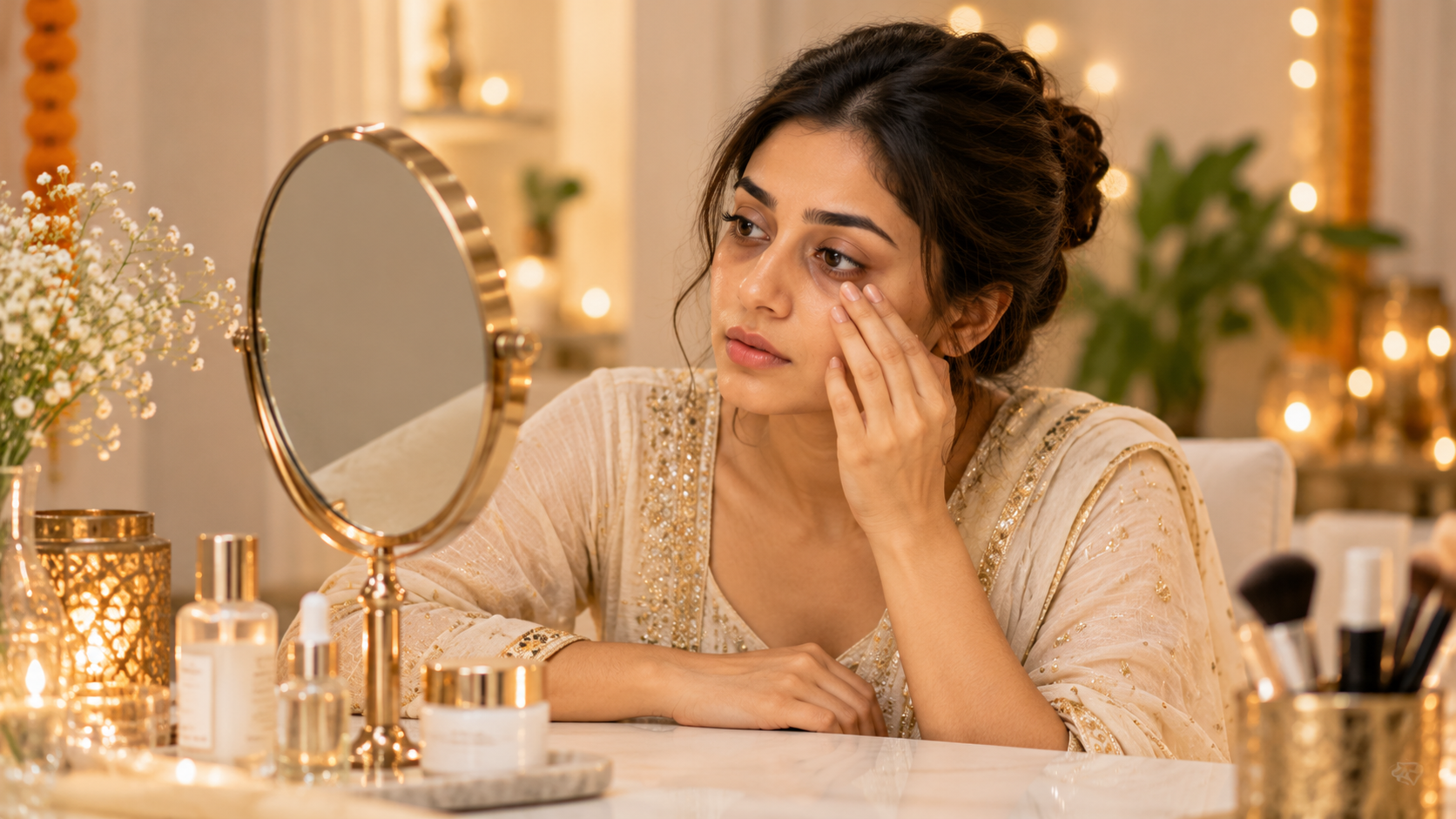
Festival photographs can be unforgiving. The dark circles you barely notice in the mirror seem deeper in flash photography, group selfies and overhead lighting. Part of the reason lies in the skin, and part lies in light and makeup. Understanding which is which decides what will actually help. (Cucumber slices are pleasant, but they are not a treatment.)
Why do dark circles look worse in photos?
- Flash and overhead light. Light from above or straight on casts a shadow into the hollow beneath the eye and flattens everything else.
- Thin skin. The skin under the eye is among the thinnest on the body, so blood vessels and pigment show through more easily.
- Makeup that settles. Concealer and powder collect in fine lines and can emphasise darkness rather than hide it.
- Late nights and dehydration. Tired, dehydrated skin looks duller and the area appears more sunken.
What causes under-eye pigmentation?
Dark circles are not a single condition. Most fall into one of three types, and many people have a combination.
| Type | What it looks like | Common causes | General approach |
| Pigment | Brown or tan darkness, usually on both sides. | Genetics, sun exposure, rubbing, allergies, and marks left after irritation. | Sun protection, gentle handling, and a pigment-focused plan where appropriate. |
| Vascular | Blue, purple or pink tone that looks worse when tired. | Thin skin showing blood vessels, fatigue, dehydration. | Hydration, sleep and treatments that improve skin quality. |
| Structural | Darkness that is really a shadow from a hollow or puffiness. | Natural bone structure, ageing, fluid retention. | Often changes with lighting. A dermatologist advises on suitable options. |
A rough at-home check: gently stretch the skin sideways. If the darkness stays, pigment is likely involved. If it fades, the colour may be vascular. If it disappears when you tilt your face upward, it may be a shadow. This is only a guide and not a diagnosis.
What actually helps?
At home
- Apply sunscreen around the eyes every morning, since UV can deepen pigment.
- Use a gentle eye-area moisturiser and avoid rubbing, particularly when removing eye makeup.
- Manage allergies, because itching and rubbing are common causes of darker skin.
- Use a cold compress for puffiness. It helps briefly but does not change pigment.
With makeup
- Use a peach or orange-toned corrector under concealer to neutralise blue and brown tones.
- Apply thin layers and set lightly, since heavy powder settles into lines.
- Prepare the skin with moisturiser first so that makeup sits smoothly.
In the clinic
A dermatologist first identifies which type, or combination, is present. Depending on the cause, options discussed at URSA may include Aquagold, which the clinic lists for rejuvenating the delicate under-eye area, and skin boosters, which replenish hyaluronic acid to improve hydration. Where pigment is the main issue, pigment-focused options such as Q-Switch laser toning may be considered, with appropriate care around the eye.
Pigment treatments take weeks, not days. For realistic expectations, read how long pigmentation takes to fade, and see our Pico and Q-Switch comparison for how the two laser types differ. For home remedies that do more harm than good, see five skincare myths.
Frequently asked questions
Do dark circles go away with more sleep?
Sleep helps when fatigue is the main factor. Circles that come from pigment, genetics or the structure of the eye area will not disappear with sleep alone.
Can concealer make dark circles look better in photographs?
Yes, when applied in thin layers over a moisturised base with a colour corrector, and set lightly. Heavy layers tend to settle and look worse under flash.
Are tea bags, potato slices or almond oil effective?
Evidence is limited. Cold compresses can reduce puffiness for a short time, but these remedies do not remove pigment, and some can irritate delicate skin.
Is laser treatment near the eyes safe?
Any procedure near the eyes requires proper eye protection and an experienced clinician. Always have the area assessed in person before a plan is made.