

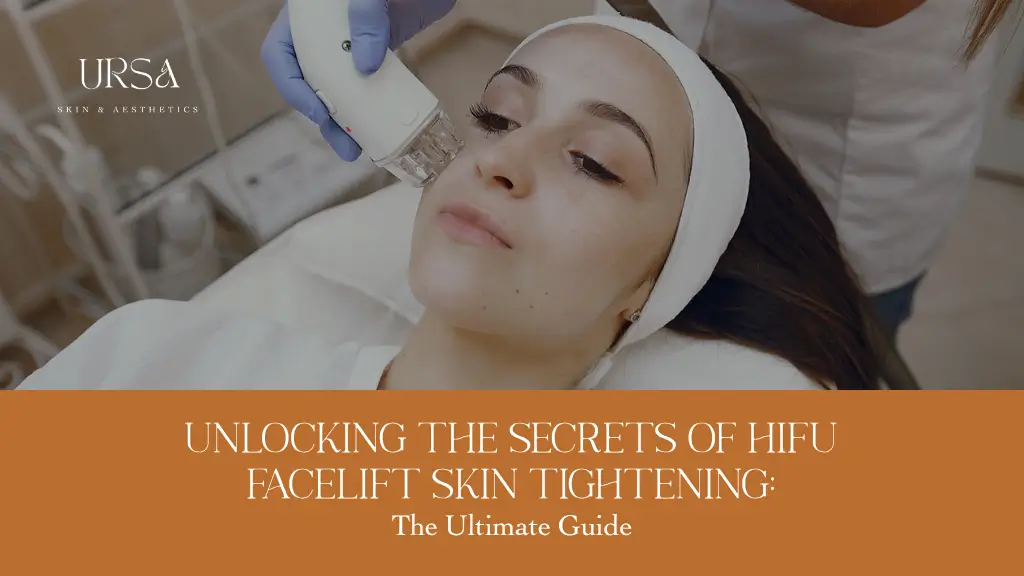
- HIFU (High-Intensity Focused Ultrasound) is the only non-invasive treatment that delivers energy to the SMAS layer, the same tissue targeted in surgical facelift.
- It stimulates deep collagen remodelling to lift sagging skin, define the jawline, tighten the neck, and improve facial contours without surgery or downtime.
- Results develop progressively over 2 to 6 months as collagen remodelling peaks, with outcomes lasting 12 to 18 months.
- HIFU is ideal for adults with mild to moderate skin laxity who want meaningful lifting results without surgical risk or recovery time.
- It combines powerfully with fillers, Botox, and skin boosters for a comprehensive non-surgical liquid facelift.
- Ursa Skin offers expert HIFU treatments in Gurgaon and Delhi with precise energy delivery for natural, lifting results.
- What Is HIFU Treatment?
- How HIFU Works: The Science of Focused Ultrasound
- Treatment Areas and Lifting Benefits
- HIFU vs Surgical Facelift
- HIFU vs Other Non-Surgical Lifting Treatments
- Who Is a Good Candidate for HIFU?
- What to Expect: Session, Results, and Timeline
- Combining HIFU with Other Rejuvenation Treatments
- Aftercare and Maintenance
- Ursa Skin Serves Patients Across Delhi NCR
- Related Reading
- Frequently Asked Questions
For patients who want meaningful facial lifting and skin tightening without undergoing surgery, HIFU represents the closest thing available to a true non-surgical facelift. Unlike treatments that improve skin surface quality or add volume, HIFU targets the deep structural layers of the face — the same tissue planes manipulated in surgical facelift procedures — to produce genuine lifting and tightening of sagging facial tissue from within. The results are real, they develop naturally over months, and they last for over a year.
At Ursa Skin, HIFU treatment is one of our most popular and technically demanding procedures. Our practitioners are trained in precise transducer placement and energy delivery protocols that target the correct tissue depths for safe, effective, and natural-looking lifting results. This guide explains exactly how HIFU achieves what it does, who benefits most, and how it fits into a comprehensive non-surgical rejuvenation plan.
1. What Is HIFU Treatment?
HIFU stands for High-Intensity Focused Ultrasound. It is a non-invasive medical procedure that uses precisely focused beams of ultrasound energy to heat small, defined zones of tissue deep within the skin and underlying supportive structures. Unlike general ultrasound, which disperses energy broadly, HIFU concentrates multiple beams at a single focal point, creating an intense thermal effect at that specific depth while leaving the overlying skin surface completely unaffected.
The technology was originally developed for medical applications including the non-invasive treatment of tumours and prostate conditions. Its application to aesthetic lifting and skin tightening was developed after researchers and clinicians recognised that the precise thermal injury created at the SMAS layer — the fibromuscular layer beneath the face — triggered a powerful collagen remodelling response that produced genuine tissue lifting. HIFU received FDA clearance for the non-invasive brow lift (under the brand name Ultherapy) in 2009, and its applications have expanded significantly since.
Key Distinction: HIFU is the only non-invasive aesthetic treatment that delivers therapeutic energy to the SMAS (superficial musculoaponeurotic system) layer, the same layer surgeons tighten in a traditional surgical facelift. This makes it uniquely capable of producing genuine structural lifting rather than simply improving surface skin quality.
At Ursa Skin, we offer both HIFU and Ultherapy treatments, using different device technologies appropriate to each patient’s specific needs and the treatment areas involved. Visit our dedicated HIFU treatment page for comprehensive information about the devices and protocols we use.
2. How HIFU Works: The Science of Focused Ultrasound
The mechanism of HIFU lifting is rooted in the physics of focused acoustic energy and the biology of connective tissue remodelling.
Thermal Coagulation Points
The HIFU transducer creates a series of discrete thermal coagulation points (TCPs) at a precise, pre-programmed depth below the skin surface. At the focal point of the ultrasound beam, tissue temperatures reach 60 to 70 degrees Celsius in milliseconds. This creates a controlled micro-injury — a tiny zone of thermal coagulation — at the target depth. The overlying skin reaches only a fraction of this temperature and is completely unharmed.
Collagen Denaturation and Remodelling
When collagen fibres are heated to 60 to 70 degrees Celsius, they undergo a process called thermal denaturation — they contract and shorten. This immediate contraction produces an immediate, subtle tightening effect that some patients notice on the treatment table. More importantly, the thermal coagulation zones are interpreted by the body as controlled injuries requiring repair, triggering a robust wound-healing response. Fibroblasts migrate to the thermal coagulation zones and produce new, well-organised collagen fibres. This neocollagenesis is the primary driver of the lifting and tightening results that develop progressively over the following 2 to 6 months.
SMAS Layer Targeting
HIFU transducers are available at different focal depths, typically 1.5 mm (dermis), 3 mm (deep dermis), and 4.5 mm (SMAS layer). By treating all three depths in a single session, HIFU stimulates collagen production across all layers of the skin and underlying tissue simultaneously, with the deepest 4.5 mm depth specifically targeting the SMAS. Tightening the SMAS layer creates lifting forces that act upward on the overlying soft tissue, similar in principle to what a surgeon achieves when tightening this layer during facelift surgery. Research published in the Plastic and Reconstructive Surgery Journal has documented HIFU’s ability to produce measurable tissue lifting through SMAS coagulation comparable to early-stage surgical intervention in appropriately selected patients.
3. Treatment Areas and Lifting Benefits
HIFU can be applied to multiple areas of the face, neck, and body to produce lifting, tightening, and skin quality improvements. The face and neck are the most common treatment zones for facial rejuvenation.
Face and Midface
Treating the midface with HIFU lifts the malar fat pad (the cheek volume) and improves the contour of the lower eyelid and cheek junction. The lifting of midface tissues also indirectly improves nasolabial fold depth by reducing the inferior descent of the cheek fat pad. Many patients notice the most impactful results in the midface, where even a few millimetres of lift produces a significant visible improvement in the overall facial architecture.
Brow and Forehead
The brow lift application of HIFU is one of its most established and FDA-cleared indications. HIFU targeting the deep SMAS and superficial musculoaponeurotic tissues of the brow can produce a visible elevation of the brow position, opening the eye area and creating a more alert, rested, and youthful appearance. This is particularly valuable for patients whose brow descent is contributing to hooded upper eyelid appearance.
Jawline and Jowls
The jawline is one of the highest-impact treatment areas for HIFU. Targeting the SMAS and deep dermis along the mandibular border tightens the skin and supportive tissue, reducing jowl formation and improving jawline definition. Combined with filler treatment along the jawline for volume support, HIFU producing tissue lift creates a comprehensive jawline enhancement without surgery.
Neck and Decolletage
The neck is particularly responsive to HIFU because the platysmal muscle and overlying skin have relatively little fat cushioning to diffuse the treatment effect. HIFU tightens loose neck skin, reduces horizontal neck lines (necklace lines), and improves the definition of the cervicomental angle (the angle between the chin and neck). For a complete lower face and neck programme, we combine HIFU with Botox Nefertiti lift for a comprehensive non-surgical neck rejuvenation.
Experience the Non-Surgical Facelift at Ursa Skin
Book a HIFU consultation at our Gurgaon or Delhi clinic. Our experts will assess your facial anatomy and design a personalised HIFU protocol to lift, tighten, and contour your face naturally.
4. HIFU vs Surgical Facelift
One of the most common questions at HIFU consultations is how it compares to surgical facelift, and whether it can truly deliver comparable results. The honest answer requires a nuanced understanding of what each approach achieves and for whom.
A surgical facelift physically removes excess skin and repositions the SMAS layer and underlying facial fat through direct surgical manipulation. It can produce the most dramatic and longest-lasting lifting results possible, capable of restoring the facial architecture of someone 10 to 20 years younger in appropriately selected patients. However, it involves general or sedation anaesthesia, 10 to 14 days of visible recovery with bruising and swelling, surgical risks including scarring and nerve injury, and significant cost.
HIFU stimulates the body’s own collagen remodelling response to produce natural lifting from within. It cannot remove excess skin, cannot physically reposition fat pads, and cannot achieve the dramatic result of surgery in patients with significant skin excess. However, for patients with mild to moderate skin laxity — a population that represents the majority of patients in their 30s to mid-50s — HIFU produces genuine and meaningful lifting that is comparable to early surgical intervention, with zero anaesthesia risk, no scarring, no recovery time, and the ability to combine with other non-surgical treatments for even more comprehensive results. Our Ultherapy treatment and thread lift treatment offer additional non-surgical lifting options that complement or extend HIFU results.
5. HIFU vs Other Non-Surgical Lifting Treatments
HIFU exists within a broader ecosystem of non-surgical tightening technologies. Understanding how it compares helps patients navigate their options and build the most effective non-surgical rejuvenation plan.
| Treatment | Mechanism | Depth of Action | Best For | Duration |
|---|---|---|---|---|
| HIFU | Focused ultrasound | SMAS (4.5 mm) to dermis | Lifting, contouring, laxity | 12 to 18 months |
| Morpheus8 (RF Microneedling) | Radiofrequency + microneedling | Up to 8 mm | Skin quality, texture, mild laxity | 12 to 18 months |
| Thread Lift | PDO threads mechanical lift | Subcutaneous | Moderate laxity, immediate result | 12 to 18 months |
| Radiofrequency (Forma) | Monopolar or bipolar RF | Dermis | Skin tightening, texture | 6 to 12 months |
| Dermal Fillers | Volumetric support | Dermis to subdermal | Volume loss, indirect lift | 9 to 18 months |
HIFU is the only non-invasive treatment that reaches the SMAS layer, making it uniquely positioned for genuine structural lifting. Morpheus8 and Forma treatment deliver radiofrequency energy for skin quality and texture improvement with a tightening component, and combine well with HIFU as a comprehensive programme. Thread lift treatment provides immediate mechanical lifting through dissolvable sutures and is an excellent complement to HIFU for patients wanting more immediate visible results alongside the collagen remodelling benefits of focused ultrasound.
6. Who Is a Good Candidate for HIFU?
HIFU produces its best results in a specific patient profile and is not appropriate or effective for everyone. Accurate candidate assessment is one of the most important aspects of the Ursa Skin HIFU consultation.
Ideal HIFU Candidates
The best HIFU candidates are adults aged 30 to 60 with mild to moderate skin laxity who are noticing descent of the midface, jowl formation, neck laxity, or brow heaviness. They have enough existing collagen in their skin to mount an effective remodelling response to the treatment — very elderly patients with severely depleted collagen may not respond as well. They have realistic expectations about gradual natural improvement rather than dramatic surgical-level transformation. They can commit to annual maintenance sessions to sustain and build results over time.
Who May Not Benefit Optimally
Patients with very advanced skin excess, severe jowling, or significant skin laxity may not achieve their goals with HIFU alone and should discuss surgical options with a plastic surgeon. Patients with active skin conditions in the treatment area, metal implants near the treatment zone, or certain medical conditions should discuss suitability with the treating clinician. Patients on blood thinners may experience more bruising but are not necessarily contraindicated. A thorough consultation at Ursa Skin identifies every individual’s optimal treatment approach.
7. What to Expect: Session, Results, and Timeline
Understanding the treatment experience and the results timeline is essential for a positive HIFU outcome. HIFU is unique in that the most significant results develop in the weeks and months after treatment rather than immediately.
During the Session
A topical numbing cream is applied 30 to 45 minutes before treatment. Ultrasound coupling gel is applied to the treatment area and the transducer is placed against the skin. The device delivers a systematic series of energy pulses across the treatment zones. With each pulse, most patients feel a brief sensation of deep warmth, tingling, or mild sharpness. This is the thermal coagulation occurring at depth. Session duration varies from 45 minutes for a focused brow/forehead treatment to 90 minutes or more for a full face and neck session.
Immediate Post-Treatment
Some patients notice immediate subtle tightening from the thermal contraction effect. The skin may appear flushed and feel tender or sensitive for a few hours to a few days. Mild swelling and occasional bruising can occur but typically resolve within a week. Most patients return to normal activities the same day.
Results Timeline
Progressive collagen remodelling produces lifting and tightening that develops over 2 to 6 months after treatment, reaching peak results at approximately 3 to 6 months. Most patients notice the most significant visual improvement at around the 3-month mark. Results then plateau and gradually diminish as natural ageing continues, typically lasting 12 to 18 months before a repeat session is beneficial.
8. Combining HIFU with Other Rejuvenation Treatments
HIFU produces the most comprehensive and impressive results when integrated into a multi-modal non-surgical rejuvenation programme that addresses all dimensions of facial ageing simultaneously.
The classic “non-surgical liquid facelift” at Ursa Skin combines HIFU for structural deep tissue lifting with dermal fillers for volume restoration, Botox for dynamic wrinkle management, and skin boosters for overall skin quality and hydration. Each treatment addresses a different dimension of facial ageing: HIFU lifts the tissue, fillers restore the volume, Botox relaxes the muscles, and skin boosters nourish the skin. Together they create a result that approaches the overall transformation of a surgical facelift without any surgical risk or recovery. Explore how our approach to Botox for a youthful appearance complements HIFU perfectly.
9. Aftercare and Maintenance
HIFU requires minimal aftercare and is one of the most lifestyle-compatible professional treatments available. Following these basic guidelines ensures optimal results and patient comfort.
Avoid strenuous exercise and significant heat exposure (saunas, very hot showers) for 24 to 48 hours after treatment to allow initial tissue response to settle. Apply gentle, non-active skincare products for the first week. Maintain daily SPF 50 application as always. Avoid facials or other aesthetic procedures to the treated area for at least 2 weeks after HIFU to allow the collagen remodelling process to begin without disruption. Schedule a review appointment at 3 months to assess results and determine whether any additional treatment is indicated.
For ongoing maintenance, an annual HIFU session is typically recommended to maintain and build upon the structural lifting achieved. Patients who combine annual HIFU with regular HydraFacial sessions and skin booster maintenance report that their skin quality and facial contour progressively improve year on year rather than simply holding steady. Visit our dedicated pages for HIFU treatment in Gurgaon and HIFU treatment in Delhi for scheduling and programme details.
HIFU results are gradual and progressive. Do not judge the treatment at 2 to 4 weeks. The most significant lifting and tightening develops between weeks 8 and 24 as collagen remodelling reaches its peak. Photograph your baseline and compare at 3 and 6 months for the most accurate assessment.
Key Takeaways
- HIFU is the only non-invasive treatment that targets the SMAS layer, producing genuine structural facial lifting without surgery or downtime.
- Results develop progressively over 2 to 6 months and last 12 to 18 months, with annual sessions maintaining and building results.
- Ideal candidates have mild to moderate skin laxity and realistic expectations about gradual natural improvement.
- Combining HIFU with fillers, Botox, and skin boosters creates a comprehensive non-surgical liquid facelift addressing all dimensions of facial ageing.
- HIFU is not a surgical facelift equivalent for patients with advanced skin excess, but it is the most effective non-invasive lifting option for appropriate candidates.
- Ursa Skin offers expert HIFU treatment in Gurgaon and Delhi with precise energy delivery protocols for safe, natural lifting results.
10. Ursa Skin Serves Patients Across Delhi NCR
Ursa Skin offers expert HIFU and Ultherapy treatments at our Gurgaon and Delhi clinics. Our trained practitioners have extensive experience with HIFU energy delivery protocols across all facial zones, ensuring safe, effective, and natural-looking lifting results for every patient.
11. Related Reading
12. Frequently Asked Questions
How long do HIFU results last?
HIFU results typically last 12 to 18 months. The collagen remodelling stimulated by HIFU continues to produce progressive improvement for up to 6 months after treatment, after which the natural ageing process continues. Annual HIFU sessions maintain and build upon results over time.
Is HIFU treatment painful?
HIFU delivers focused ultrasound energy deep into the tissue, which produces a sensation of heat, tingling, or brief sharp discomfort at the depth of energy delivery. The level of discomfort varies between individuals and treatment areas. Most patients find the treatment manageable with topical numbing cream applied beforehand.
How many HIFU sessions are needed?
Most patients achieve excellent results with a single HIFU session per year. The collagen remodelling from one treatment develops progressively over 3 to 6 months, so the full result is assessed at 6 months before determining whether additional treatment is needed. Annual sessions maintain and build upon results over time.
What is the difference between HIFU and a surgical facelift?
A surgical facelift physically removes excess skin and repositions underlying tissue for the most dramatic lifting possible. HIFU stimulates the body’s own collagen remodelling to tighten and lift naturally without surgery, anaesthesia, or recovery time. HIFU is ideal for mild to moderate laxity; patients with advanced skin excess may require surgery.
Who is the ideal candidate for HIFU treatment?
The ideal HIFU candidate is an adult aged 30 to 60 with mild to moderate skin laxity, facial and neck tissue descent, and jowl formation who wants natural lifting and tightening without surgery. Younger patients with very good skin elasticity may not show dramatic results, while patients with very advanced skin excess may need surgery.
Is there downtime after HIFU treatment?
HIFU requires minimal to no downtime. Mild redness, swelling, and tingling in the treated area are common for a few hours to a few days. Some patients experience mild bruising which resolves within a week. Most patients return to normal activities the same day or following day.
Can HIFU be combined with other non-surgical treatments?
Yes. HIFU combines excellently with dermal fillers, Botox, skin boosters, and microneedling. HIFU addresses tissue laxity and structural descent; fillers restore volume; Botox manages dynamic wrinkles; and skin boosters improve skin quality. Together they create a comprehensive non-surgical liquid facelift.
When will I see HIFU results?
Some patients notice initial tightening immediately after HIFU treatment. Progressive lifting and firming then develop over 2 to 6 months as collagen remodelling reaches its peak. The full result of a HIFU session is typically assessed at 6 months post-treatment.