
- Hair fall has multiple potential causes including genetics, hormones, nutrition, stress, and scalp health — identifying the cause is the first step in effective treatment.
- Proven non-surgical options include PRP therapy, GFC therapy, Keravive scalp treatment, mesotherapy, and medically prescribed topicals.
- Hair transplant surgery is the only permanent solution for areas where follicles have been permanently lost due to androgenetic alopecia.
- Early intervention consistently delivers better outcomes — do not wait until loss is advanced before seeking treatment.
- Combining multiple complementary treatments produces superior results to any single treatment approach alone.
- Ursa Skin offers comprehensive hair fall assessment and treatment in Gurgaon and Delhi with personalised protocols for every patient.
- Understanding Hair Fall: Causes and Types
- How Hair Fall Treatments Work
- PRP Therapy for Hair Loss
- GFC Therapy: The Advanced Option
- Keravive Scalp Treatment
- Mesotherapy for Hair Fall
- Hair Transplant for Advanced Hair Loss
- Comparing Hair Fall Treatment Options
- How to Choose the Right Treatment
- Ursa Skin Serves Patients Across Delhi NCR
- Related Reading
- Frequently Asked Questions
Hair fall is one of the most emotionally distressing aesthetic concerns a person can face, yet it is also one of the most undertreated. Many people resign themselves to progressive hair loss because they believe effective treatments do not exist or are reserved only for those with severe baldness. The reality is very different: modern hair medicine offers a range of highly effective, evidence-based treatments that can significantly reduce shedding, stimulate regrowth, and restore hair density, particularly when treatment begins early.
At Ursa Skin, hair fall is one of the most common concerns we address. Our hair specialists conduct thorough assessments to identify the underlying cause of each patient’s hair loss and design a personalised treatment protocol. This guide covers all the proven treatment options available at our clinic, from non-surgical regenerative therapies to surgical restoration, to help you understand what is possible for your hair.
1. Understanding Hair Fall: Causes and Types
Effective treatment begins with accurate diagnosis. Hair fall has multiple potential causes, and the same pattern of shedding or thinning can have different underlying drivers in different patients. Identifying the specific cause is the essential first step before any treatment is initiated.
Androgenetic Alopecia
The most common form of hair loss in both men and women, androgenetic alopecia is a genetically mediated condition driven by the hormone dihydrotestosterone (DHT). DHT causes hair follicles in susceptible areas to miniaturise progressively, producing finer, shorter hairs until the follicle eventually stops producing hair altogether. In men, this typically follows a recognisable pattern of frontal recession and crown thinning. In women, the pattern is more diffuse with preservation of the frontal hairline.
Telogen Effluvium
Telogen effluvium is a form of diffuse, temporary hair shedding triggered by a physical or emotional stressor that pushes a large proportion of hairs simultaneously into the resting (telogen) phase of the hair cycle. Common triggers include illness, fever, surgery, nutritional deficiencies, childbirth (postpartum telogen effluvium), crash dieting, and significant psychological stress. In most cases, this type of hair loss resolves spontaneously once the trigger is addressed, typically within 6 to 12 months.
Nutritional Deficiencies
Iron deficiency (particularly low ferritin), zinc, vitamin D, and protein deficiencies are among the most common nutritional contributors to hair fall in Indian patients. Blood tests to assess these levels are a standard part of a comprehensive hair fall work-up at Ursa Skin. Addressing identified deficiencies through dietary modification or supplementation is an important component of the overall treatment plan.
Scalp Conditions
Conditions such as seborrheic dermatitis, scalp psoriasis, and scalp inflammation can impair the follicle environment and contribute to hair fall. Treating the underlying scalp condition is essential before regenerative hair treatments can be fully effective. Explore our Keravive scalp treatment as an adjunct to scalp health optimisation.
Prevalence Fact: According to data published by the National Library of Medicine, androgenetic alopecia affects approximately 50% of men over the age of 50 and up to 40% of women by the age of 70. In India, cases of early-onset androgenetic alopecia in the 20s and 30s are increasingly common.
2. How Hair Fall Treatments Work
Different treatments for hair fall operate through different mechanisms. Understanding these mechanisms helps you appreciate why specific treatments are recommended for specific causes and stages of hair loss.
Growth Factor Stimulation
Treatments such as PRP and GFC therapy work by delivering concentrated growth factors directly to the scalp, stimulating dormant or miniaturising follicles to re-enter the active growth phase, improving blood supply to the scalp, and strengthening the hair shaft during the growth phase. These treatments work best when follicles are still present and capable of responding.
Scalp Environment Optimisation
Treatments like Keravive and mesotherapy address the scalp environment, removing impediments to healthy follicle function such as sebum buildup, inflammation, and poor circulation, and delivering nutrients and stimulants directly to the follicle zone.
Surgical Follicle Restoration
Hair transplant surgery is the definitive solution for areas where follicles have been permanently lost. Unlike non-surgical treatments that work with existing follicles, transplantation introduces new DHT-resistant follicles from the donor zone to restore permanent hair growth in bald or thinning areas.
3. PRP Therapy for Hair Loss
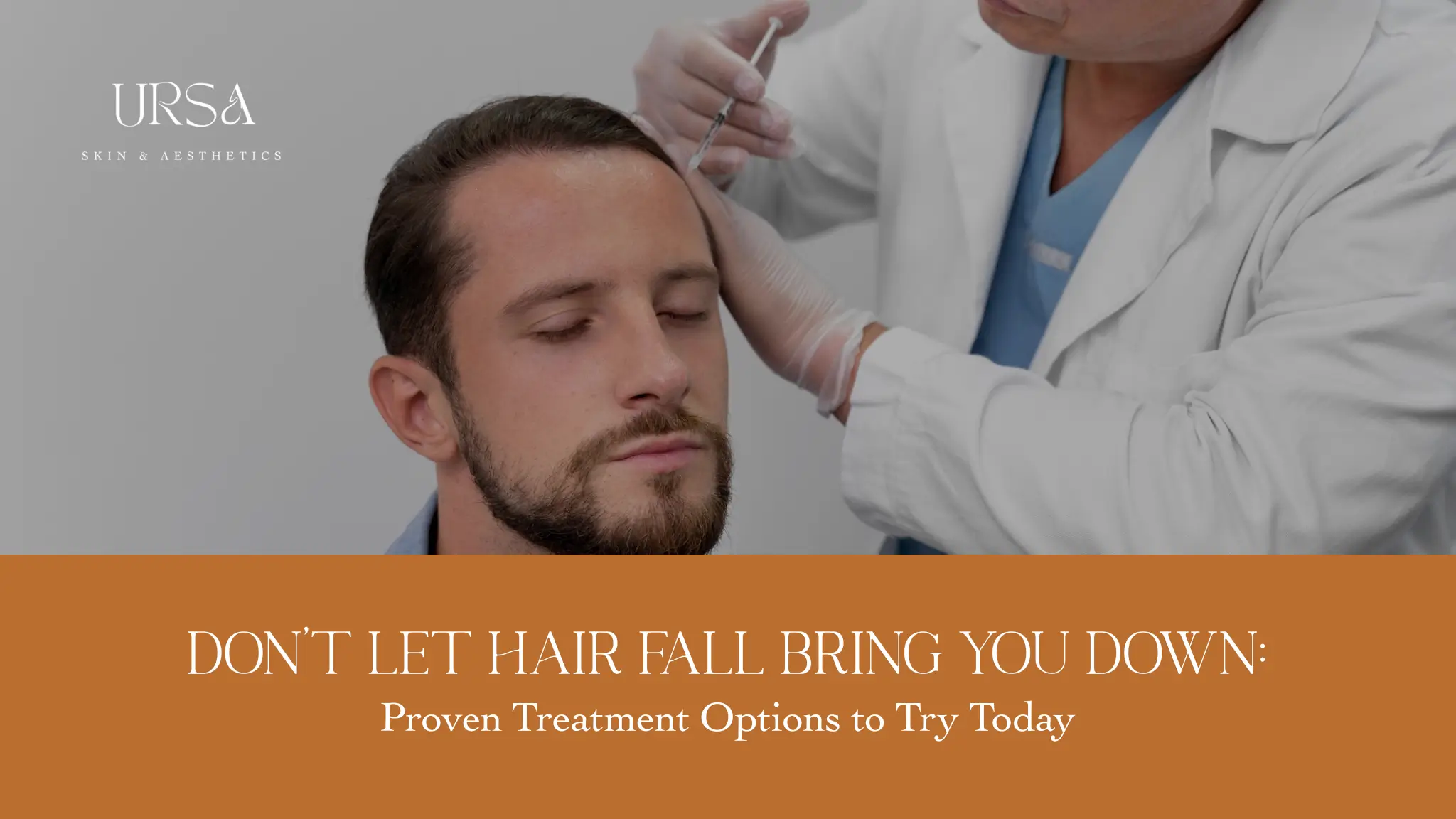
Platelet-rich plasma (PRP) therapy is one of the most well-researched and widely used non-surgical treatments for androgenetic alopecia and telogen effluvium. It involves drawing a small sample of the patient’s own blood, processing it in a centrifuge to concentrate the platelets, and injecting the resulting platelet-rich plasma into the scalp at the level of the hair follicles.
Platelets contain a rich reservoir of growth factors including platelet-derived growth factor (PDGF), vascular endothelial growth factor (VEGF), and insulin-like growth factor (IGF), all of which play documented roles in stimulating hair follicle activity and prolonging the anagen (growth) phase of the hair cycle. A study published in the Dermatology Times demonstrated that PRP treatment produced statistically significant increases in hair density and thickness in patients with androgenetic alopecia across multiple clinical trials.
A standard PRP hair loss treatment course at Ursa Skin consists of 3 to 4 sessions spaced 4 to 6 weeks apart, followed by maintenance sessions every 3 to 6 months. Results are gradual and progressive, with significant improvement typically visible from 3 to 6 months after beginning treatment. Explore our dedicated PRP for hair loss treatment page for full details. You can also read our comparison of PRP vs hair transplant for more context.
4. GFC Therapy: The Advanced Option
Growth Factor Concentrate (GFC) therapy represents an evolution of PRP, using a more advanced processing technique to extract a higher and more selective concentration of specific growth factors from the patient’s blood. While standard PRP concentrates all platelet-derived contents, GFC specifically targets the growth factors most relevant to hair follicle stimulation, resulting in a more potent therapeutic solution.
Clinical comparisons suggest GFC therapy produces results comparable to or modestly superior to PRP in terms of hair density improvement and reduction in hair fall. The treatment protocol is similar to PRP, with sessions spaced 4 to 6 weeks apart and maintenance treatments thereafter. GFC is a particularly attractive option for patients who have not achieved adequate results with standard PRP or who want the most advanced growth factor therapy available. Read our full comparison of GFC vs PRP for hair restoration and our article on GFC therapy as the new buzz in hair restoration. Our GFC therapy treatment page provides full clinical details.
5. Keravive Scalp Treatment
Keravive scalp treatment adapts the proven HydraFacial technology specifically for the scalp, delivering a three-step protocol of deep scalp cleansing, follicle stimulation, and nourishment with a proprietary blend of growth factors, proteins, and biomimetic peptides. The treatment addresses scalp health as the foundation for optimal hair growth.
A healthy scalp is essential for healthy hair. Excess sebum, product buildup, dead skin cells, and inflammation can all impair follicle function and reduce the effectiveness of other hair treatments. Keravive creates the cleanest possible scalp environment by removing these impediments and delivering direct nourishment to the follicle zone. The included take-home spray maintains scalp health between clinic sessions. Keravive is an excellent standalone treatment for patients with primarily scalp-related hair quality issues and an ideal companion treatment for PRP and GFC therapy. Read our comparison of Keravive vs PRP for hair regrowth.
Think of Keravive as preparing the soil before planting. A clean, well-nourished scalp environment allows PRP and GFC growth factors to work more effectively on the follicles beneath.
6. Mesotherapy for Hair Fall
Mesotherapy for hair loss involves injecting a customised cocktail of vitamins, minerals, amino acids, and hair growth stimulants directly into the mesoderm (middle layer) of the scalp at the level of the hair follicles. The injected nutrients bypass the skin barrier entirely, delivering active ingredients at precisely the location where they can have the greatest impact on follicle health.
Mesotherapy solutions for hair fall typically contain biotin, finasteride, minoxidil, vitamins B5 and B12, hyaluronic acid, and various plant extracts known to promote circulation and follicle activity. The treatment is particularly effective for diffuse hair thinning, telogen effluvium, and as part of a comprehensive programme for early androgenetic alopecia. Sessions are typically administered every 2 to 4 weeks for an initial course of 6 to 8 sessions. Our mesotherapy treatment page provides full protocol details.
Book Your Hair Fall Assessment at Ursa Skin
Our hair specialists will identify the exact cause of your hair fall and recommend the most effective combination of treatments to restore your hair health and density.
7. Hair Transplant for Advanced Hair Loss
For patients with advanced hair loss where significant areas of the scalp are permanently bald, non-surgical treatments can maintain and strengthen remaining hair but cannot restore hair to follicle-free zones. In these cases, hair transplant surgery is the definitive solution.
Modern FUE (Follicular Unit Extraction) hair transplant at Ursa Skin involves harvesting individual follicular units from the DHT-resistant donor zone at the back and sides of the scalp and transplanting them into the recipient areas. Transplanted follicles are permanent, growing hair for life in their new location. The procedure is performed under local anaesthesia with minimal downtime. For a comprehensive overview of the procedure, myths, and realistic expectations, read our article on hair transplant myths vs facts. Find out more about our clinic’s approach at our advanced hair transplant overview page.
8. Comparing Hair Fall Treatment Options
| Treatment | Best For | Sessions Required | Results Timeline | Permanent? |
|---|---|---|---|---|
| PRP Therapy | Early to moderate androgenetic, telogen effluvium | 3 to 4 initial, then maintenance | 3 to 6 months | No (maintenance needed) |
| GFC Therapy | Early to moderate androgenetic alopecia | 3 to 4 initial, then maintenance | 3 to 6 months | No (maintenance needed) |
| Keravive | Scalp health, hair quality, mild thinning | 3 initial, then monthly | 1 to 3 months | No (ongoing) |
| Mesotherapy | Diffuse thinning, telogen effluvium | 6 to 8 initial, then monthly | 2 to 4 months | No (maintenance needed) |
| Hair Transplant | Advanced loss, permanently bald areas | 1 to 2 surgical sessions | 12 to 18 months | Yes |
9. How to Choose the Right Treatment
Selecting the most appropriate hair fall treatment requires a thorough clinical assessment that considers the type of hair loss, its stage, the patient’s age, overall health, and goals. At Ursa Skin, every hair consultation includes a detailed scalp examination, trichoscopic assessment, and review of relevant blood investigations to ensure the most accurate diagnosis and treatment recommendation.
Early Stage Hair Loss
For patients in the early stages of androgenetic alopecia or experiencing telogen effluvium, a combination of PRP or GFC therapy, scalp health optimisation with Keravive or mesotherapy, and appropriate medical treatment (topical minoxidil, oral supplements) typically produces excellent results. The goal at this stage is to halt further loss and stimulate regrowth from still-active follicles.
Moderate Hair Loss
Patients with moderate hair loss who still have living, miniaturised follicles in thinning areas benefit most from intensive regenerative treatment. A combination of GFC or PRP therapy alongside scalp micropigmentation for immediate cosmetic improvement and ongoing medical treatment forms the most comprehensive moderate-stage protocol. Explore our scalp micropigmentation treatment page for an innovative cosmetic option.
Advanced Hair Loss
For patients with advanced hair loss and large areas of permanent baldness, hair transplant surgery combined with non-surgical treatment to protect remaining native hair is the most effective strategy. Non-surgical treatments support transplanted graft survival post-procedure and maintain the quality and density of non-transplanted hair over time. Visit our hair transplant in Gurgaon page for more information. The International Society of Hair Restoration Surgery recommends a combination approach for most patients with androgenetic alopecia to address both existing and potential future loss.
Key Takeaways
- Accurate diagnosis of the cause and type of hair fall is the foundation of effective treatment planning.
- PRP and GFC therapy are the most evidence-based non-surgical options for androgenetic alopecia and telogen effluvium.
- Keravive and mesotherapy optimise the scalp environment and enhance the effectiveness of regenerative treatments.
- Hair transplant surgery is the only permanent solution for permanently bald areas and should be combined with non-surgical maintenance.
- Early intervention consistently delivers better outcomes than waiting for hair loss to advance significantly.
- A personalised combination approach managed by an experienced hair specialist produces superior results to any single treatment alone.
10. Ursa Skin Serves Patients Across Delhi NCR
Ursa Skin offers the full spectrum of proven hair fall treatments at our Gurgaon and Delhi clinics. From your initial hair assessment and blood work review to your personalised treatment programme and long-term maintenance plan, our hair specialists provide comprehensive, expert care at every stage of your hair restoration journey.
11. Related Reading
12. Frequently Asked Questions
What is the most effective treatment for hair fall?
The most effective treatment depends on the underlying cause and severity of hair fall. For androgenetic alopecia, a combination of medical treatments (minoxidil or finasteride) and regenerative therapies (PRP or GFC) typically produces the best results for early to moderate loss. For advanced hair loss, hair transplant surgery provides the most permanent and significant restoration.
How many PRP sessions are needed for hair fall?
A standard PRP hair loss treatment course consists of 3 to 4 sessions spaced 4 to 6 weeks apart, followed by maintenance sessions every 3 to 6 months. Results from PRP are progressive and typically become visible 3 to 6 months after beginning treatment.
Can hair fall be reversed completely?
Whether hair fall can be reversed depends on the type and stage of hair loss. Early-stage androgenetic alopecia with miniaturised but still-living follicles can often be significantly improved and in some cases reversed with regenerative treatments. Once follicles have been completely destroyed and replaced by scar tissue, reversal is not possible — only transplantation of new follicles can restore hair in those areas.
Is GFC therapy better than PRP for hair loss?
GFC (Growth Factor Concentrate) therapy uses a higher concentration of specific growth factors than standard PRP, potentially delivering a more potent stimulus to hair follicles. Clinical comparisons suggest GFC produces comparable or slightly superior results to PRP in many patients. The choice between the two is best made during a personalised consultation with your hair specialist at Ursa Skin.
What causes sudden hair fall?
Sudden hair fall (telogen effluvium) is commonly triggered by physical or emotional stress, significant illness or fever, nutritional deficiencies (particularly iron, ferritin, zinc, or protein), hormonal changes such as postpartum or thyroid dysfunction, crash dieting, or major surgery. In most cases, this type of hair loss is temporary and resolves once the trigger is addressed.
At what age should I start hair fall treatment?
There is no minimum age threshold for hair fall treatment. Early intervention is consistently associated with better outcomes because treatments are more effective when follicles are still active and only miniaturised rather than completely lost. If you are noticing increased shedding or thinning at any age, a prompt consultation to identify the cause and begin appropriate treatment is advisable.
Is Keravive effective for hair fall?
Keravive scalp treatment addresses scalp health by deeply cleansing, exfoliating, and nourishing the scalp environment. While it is not a direct treatment for androgenetic alopecia, it creates an optimal scalp condition that supports the effectiveness of other hair fall treatments such as PRP and GFC. It is particularly beneficial for patients with scalp buildup, dryness, or poor scalp circulation contributing to hair quality issues.
Can stress cause permanent hair loss?
Stress-induced hair loss (telogen effluvium) is typically temporary and self-limiting. Hair growth usually resumes 6 to 12 months after the triggering stress event resolves. However, chronic, sustained stress over a long period can accelerate the progression of androgenetic alopecia in genetically predisposed individuals. Addressing the underlying stress alongside appropriate hair treatments is important for a full recovery.