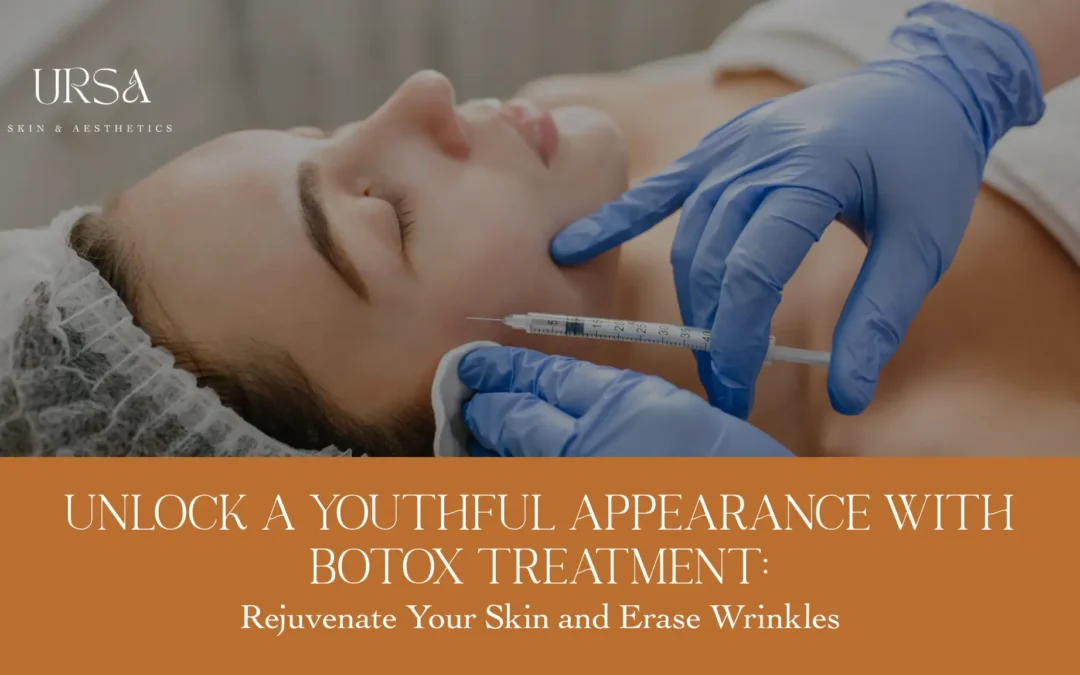

- Botox is a purified neurotoxin protein that temporarily relaxes targeted facial muscles to reduce wrinkles and fine lines.
- Results typically appear within 3 to 5 days and last between 3 to 6 months depending on the area and individual metabolism.
- Treatment takes just 15 to 30 minutes with zero downtime, making it one of the most popular non-surgical aesthetic procedures worldwide.
- Botox is clinically approved for both cosmetic and medical indications including hyperhidrosis, migraine, and jaw clenching.
- When administered by trained professionals, Botox is safe, precise, and highly effective for facial rejuvenation.
- Ursa Skin offers expert Botox treatments in Gurgaon and Delhi with customised dosing protocols for natural-looking results.
- What Is Botox Treatment?
- How Botox Works: The Science Behind It
- Types of Botulinum Toxin Products
- Treatment Areas and Applications
- Medical and Therapeutic Uses of Botox
- Botox vs Dermal Fillers: Key Differences
- What to Expect During Your Session
- How to Choose the Right Clinic
- Aftercare and Best Practices
- Ursa Skin Serves Patients Across Delhi NCR
- Related Reading
- Frequently Asked Questions
Botox has become one of the most recognised names in aesthetic medicine, and for good reason. Whether you are looking to soften forehead lines, prevent the early signs of ageing, or address a medical concern such as excessive sweating, understanding exactly how Botox works empowers you to make confident, informed decisions about your skin. At Ursa Skin, our board-certified practitioners deliver personalised Botox treatments designed to achieve natural, refreshed results without compromising facial expression. This comprehensive guide covers everything you need to know before booking your first session.
From the mechanism of action and treatment areas to aftercare protocols and choosing a qualified provider, this guide draws on current clinical evidence and the expertise of our aesthetic specialists. Whether you are a first-timer or considering a top-up, you will find everything you need right here.
1. What Is Botox Treatment?
Botox is the trade name for a highly purified form of botulinum toxin type A, a protein produced by the bacterium Clostridium botulinum. In controlled, medical-grade doses, this protein safely and temporarily blocks nerve signals to targeted muscles, causing them to relax. The result is a visible reduction in dynamic wrinkles, the lines formed by repetitive facial movements such as frowning, squinting, and smiling.
First approved by the United States Food and Drug Administration (FDA) for cosmetic use in 2002, Botox has since become the most performed non-surgical cosmetic procedure globally. According to the International Society of Aesthetic Plastic Surgery, over 9 million Botox procedures are performed every year worldwide. Its versatility, safety profile, and predictable outcomes have established it as a cornerstone of modern aesthetic medicine.
Stat Spotlight: Botox is the single most popular non-surgical cosmetic treatment globally, accounting for nearly 40% of all minimally invasive aesthetic procedures performed each year.
Unlike surgical facelifts, Botox requires no incisions, no anaesthesia, and no recovery time. A typical treatment session at our clinic takes between 15 and 30 minutes, after which patients can return immediately to their daily activities. The effects are temporary by design, lasting 3 to 6 months, and results can be adjusted at each subsequent visit to accommodate changing aesthetic goals.
2. How Botox Works: The Science Behind It
Understanding the mechanism of Botox helps demystify why it is so effective at reducing wrinkles and treating certain medical conditions. The treatment operates at the neuromuscular junction, the point where nerve endings meet muscle fibres.
The Neuromuscular Junction Mechanism
When you make a facial expression, your brain sends an electrical signal along a motor nerve to the target muscle. At the end of the nerve, a chemical messenger called acetylcholine is released. Acetylcholine binds to receptors on the muscle, triggering a contraction. Botox works by binding to the nerve terminal and blocking the release of acetylcholine. Without this chemical signal, the muscle cannot contract, and it temporarily relaxes.
This selective muscle relaxation is precisely what smooths out wrinkles. The surrounding tissues and non-injected muscles are unaffected, which is why skilled practitioners can achieve natural facial movement while eliminating unwanted lines.
Onset and Duration
Botox does not produce immediate results. The protein needs time to bind fully to nerve terminals after injection. Most patients begin to notice softening of lines within 3 to 5 days, with peak results visible at day 10 to 14. The effects last between 3 and 6 months, at which point the nerve begins to regenerate new terminals and muscle activity gradually returns. With repeat treatments, many patients find their results last longer as the muscle weakens over time from reduced use.
Botox does not erase wrinkles instantly. Allow 10 to 14 full days for the complete effect to develop before assessing your results or scheduling a review appointment.
3. Types of Botulinum Toxin Products
While “Botox” is often used as a generic term, it refers specifically to the product manufactured by Allergan (now AbbVie). Several other botulinum toxin type A products are available and used clinically in India and globally. Understanding the differences helps you have an informed conversation with your practitioner.
| Product Name | Manufacturer | Key Characteristic | Common Use |
|---|---|---|---|
| Botox (onabotulinumtoxinA) | Allergan / AbbVie | Most studied, original brand | Cosmetic and medical |
| Dysport (abobotulinumtoxinA) | Ipsen / Galderma | Faster onset, wider spread | Larger areas, forehead |
| Xeomin (incobotulinumtoxinA) | Merz | Protein-free formulation | Patients with antibody concerns |
| Nuceiva (prabotulinumtoxinA) | Evolus | Similar to Botox, newer agent | Glabellar lines |
All approved botulinum toxin products are tested for safety and efficacy, and the choice between them is largely a clinical decision based on the treatment area, patient history, and practitioner preference. At Ursa Skin, we use only premium, approved products to ensure consistent, reliable outcomes.
4. Treatment Areas and Applications
One of the greatest strengths of Botox is its versatility. It can be applied to multiple areas of the face and body to address both cosmetic and functional concerns. Below are the most commonly treated areas.
Upper Face
The upper face is the most popular treatment zone. Horizontal forehead lines, the vertical frown lines between the eyebrows (known as glabellar lines or “11 lines”), and crow’s feet at the outer corners of the eyes all respond exceptionally well to Botox. These are classic examples of dynamic wrinkles, formed by years of repeated muscle movement.
Mid and Lower Face
Botox can be used subtly in the mid and lower face to lift the brow, reduce bunny lines on the nose, flip the upper lip for a fuller appearance (the “lip flip”), smooth dimpling of the chin, and relax the depressor anguli oris muscles to address downturned mouth corners. These techniques require advanced injector skill to maintain natural facial balance.
Neck and Jawline
The platysmal bands in the neck (Nefertiti lift) respond well to Botox, creating a more defined jawline and smoother neck. Masseter Botox, targeting the large chewing muscle at the angle of the jaw, is popular for both facial slimming and treating bruxism (teeth grinding).
Ready to Start Your Botox Journey?
Book a personalised consultation with our expert practitioners at Ursa Skin and discover the right treatment plan for your skin goals.
5. Medical and Therapeutic Uses of Botox
Beyond aesthetics, botulinum toxin has a well-established history as a medical treatment. Its muscle-relaxing properties make it effective for a wide range of clinical indications.
Hyperhidrosis (Excessive Sweating)
Botox is one of the most effective treatments for primary focal hyperhidrosis, particularly in the underarms, palms, and soles of the feet. By blocking the nerve signals to sweat glands, it can reduce sweating by up to 87% for 6 to 12 months, according to studies published by the American Academy of Dermatology.
Chronic Migraine
The FDA has approved Botox for the prevention of chronic migraines in adults. Injections are administered every 12 weeks into 31 to 39 points around the head and neck, helping reduce the frequency and severity of migraine episodes.
Bruxism and TMJ Disorders
Masseter Botox injections relax the jaw muscle responsible for teeth grinding and jaw clenching. This not only reduces pain and damage to the teeth but also slims the lower face in patients with pronounced jaw muscles. Many patients at Ursa Skin seek this treatment for both therapeutic and aesthetic benefits. Explore our filler treatments to complement jaw refinement results.
Overactive Bladder and Spasticity
In clinical settings, botulinum toxin is used to treat overactive bladder, spasticity in cerebral palsy, strabismus (crossed eyes), and cervical dystonia (involuntary neck muscle contractions). These indications highlight the broad therapeutic range of this powerful protein.
6. Botox vs Dermal Fillers: Key Differences
Botox and dermal fillers are frequently discussed together because they are both injectable treatments used for facial rejuvenation. However, they work in fundamentally different ways and address different concerns.
Botox relaxes muscles to reduce dynamic wrinkles caused by movement. Dermal fillers, typically made from hyaluronic acid, add volume to areas that have lost fullness due to ageing, such as the cheeks, temples, nasolabial folds, and lips. Fillers can also be used for structural augmentation, including lip augmentation and non-surgical nose shaping.
While Botox targets the cause of expression lines (muscle contraction), fillers address the result of volume loss (hollowing and sagging). Many patients benefit from a combination approach, using Botox to relax active muscles and fillers to restore lost volume. This synergistic strategy is often referred to as a “liquid facelift.” At Ursa Skin, we offer comprehensive combination plans tailored to your anatomy and goals. Learn more about our skin booster treatments as an additional layer of hydration and glow.
7. What to Expect During Your Botox Session
Understanding the treatment process reduces anxiety and helps you prepare effectively. Here is a step-by-step overview of what happens at a typical Botox appointment at Ursa Skin.
Consultation and Assessment
Your journey begins with a thorough consultation where your practitioner will assess your facial anatomy, discuss your concerns and aesthetic goals, review your medical history, and design a personalised treatment plan. This is the most important step in achieving natural-looking results. Visit our About Us page to learn about our team’s qualifications and approach.
Pre-Treatment Preparation
On the day of treatment, your skin will be cleansed and a topical anaesthetic cream may be applied if requested. Photographs are often taken to document the baseline. Avoid taking blood-thinning medications like aspirin or ibuprofen for 24 to 48 hours prior if possible, and inform your practitioner of any supplements you are taking.
The Injection Process
Using a very fine needle, the practitioner carefully injects precise amounts of Botox into the targeted muscles. The number of injection points and units varies based on the treatment plan. Most patients describe the sensation as a slight pinch. The entire procedure typically takes 15 to 30 minutes.
Immediate Post-Treatment
You may notice small bumps at injection sites immediately after treatment; these resolve within 20 to 30 minutes. Mild redness or swelling is normal and typically subsides within a few hours. You can apply makeup after 4 hours and return to work the same day.
8. How to Choose the Right Botox Clinic
Selecting a qualified, reputable clinic is the single most important decision in your Botox journey. The quality of outcomes depends almost entirely on the skill, knowledge, and artistry of the injector.
Qualifications and Training
Always ensure your practitioner is a licensed medical professional, such as a dermatologist, plastic surgeon, or trained aesthetic physician with specific training in facial anatomy and injectable techniques. At Ursa Skin, all treatments are performed by qualified doctors and certified aesthetic practitioners. Our full range of treatments reflects our commitment to clinical excellence.
Product Authenticity
Insist on knowing which brand of botulinum toxin is being used and verify that it is a genuine, approved product sourced from legitimate medical distributors. Counterfeit or diluted products pose significant safety risks and produce inconsistent results.
Personalised Treatment Planning
Be wary of clinics offering one-size-fits-all pricing or fixed unit packages without first assessing your anatomy. A skilled injector will create a custom dosing plan based on your muscle strength, facial structure, and desired outcome. Whether you are seeking Botox in Gurgaon or Botox in Delhi, Ursa Skin provides tailored care at every visit.
The Journal of Clinical and Aesthetic Dermatology highlights that practitioner expertise is the primary determinant of both safety and aesthetic outcomes in botulinum toxin therapy.
9. Aftercare and Best Practices
Following the correct aftercare guidelines ensures optimal results and minimises the risk of complications. Your practitioner at Ursa Skin will provide a detailed post-treatment care sheet, but here are the core principles.
What to Do
Keep the treated area clean and avoid touching or rubbing it for at least 4 hours after treatment. Remain upright for 4 hours post-injection. Perform gentle facial exercises in the treated areas (such as frowning and raising your eyebrows) within the first hour if recommended by your practitioner, as this may help distribute the product into the target muscles.
What to Avoid
Avoid strenuous exercise, saunas, steam rooms, and hot baths for 24 to 48 hours after treatment, as heat and increased blood flow can cause the product to migrate. Avoid alcohol for 24 hours and refrain from massaging or applying pressure to the injection areas. Do not lie face-down for 4 hours post-treatment.
Long-Term Maintenance
To maintain results, schedule follow-up treatments every 3 to 4 months initially. As the muscle becomes accustomed to relaxation over time, intervals between treatments may extend. Combining Botox with a good skincare routine, SPF protection, and treatments such as HydraFacial or chemical peels will enhance and prolong your overall skin health and appearance.
Consistent, spaced treatments over time train the muscles to stay relaxed longer, meaning many long-term Botox patients need fewer units and less frequent sessions to maintain their results.
Key Takeaways
- Botox is a purified protein that temporarily blocks nerve signals to targeted muscles, reducing dynamic wrinkles.
- Results begin within 3 to 5 days and last 3 to 6 months on average.
- Treatment is quick, safe, and requires no downtime when performed by a qualified professional.
- Botox has both cosmetic and medical applications, including hyperhidrosis and migraine prevention.
- Combining Botox with fillers and skin treatments delivers the most comprehensive rejuvenation.
- Choosing a qualified, experienced practitioner is the most critical factor in achieving safe, natural results.
10. Ursa Skin Serves Patients Across Delhi NCR
Ursa Skin is proud to offer world-class aesthetic treatments to patients across the Delhi NCR region and beyond. Our clinics in Gurgaon and Delhi are equipped with the latest technology and staffed by experienced aesthetic physicians committed to delivering safe, personalised, and effective care.
11. Related Reading
12. Frequently Asked Questions
How long does Botox treatment last?
Botox results typically last between 3 to 6 months. The duration depends on the treatment area, the dose administered, your metabolism, and how frequently you receive treatments. Regular maintenance sessions can extend the longevity of results over time.
Is Botox treatment painful?
Botox injections involve minimal discomfort. Most patients describe the sensation as a slight pinch. A topical numbing cream can be applied beforehand to further reduce any discomfort. The procedure is completed within 15 to 30 minutes.
When will I see results after Botox?
Initial results begin to appear within 3 to 5 days of treatment, with full results visible by day 10 to 14. The treated muscles gradually relax, smoothing out wrinkles and fine lines over this period.
What areas can be treated with Botox?
Botox can be used to treat forehead lines, frown lines between the eyebrows (glabellar lines), crow’s feet around the eyes, bunny lines on the nose, lip lines, chin dimpling, neck bands (platysma), and excessive sweating (hyperhidrosis).
What is the difference between Botox and dermal fillers?
Botox works by temporarily relaxing muscles to reduce dynamic wrinkles caused by facial movement. Dermal fillers add volume to areas that have lost fullness due to ageing, such as the cheeks and lips. Both treatments are complementary and are often used together for full facial rejuvenation.
Who is a good candidate for Botox?
Adults in good health who are concerned about dynamic wrinkles, excessive sweating, or certain medical conditions such as migraines or jaw clenching are good candidates. Botox is not recommended during pregnancy, breastfeeding, or for individuals with certain neuromuscular disorders.
How many units of Botox do I need?
The number of units required varies by individual and treatment area. Forehead lines typically require 10 to 30 units, frown lines 20 to 25 units, and crow’s feet 10 to 15 units per side. Your clinician at Ursa Skin will assess your facial anatomy and recommend the correct dosage.
Are there any side effects of Botox?
Common side effects are mild and temporary, including slight redness, swelling, or bruising at the injection site. Rare side effects include temporary headache or slight drooping of the eyelid, which resolves on its own. Serious adverse events are extremely rare when treatment is performed by a qualified professional.
How much does Botox treatment cost in Gurgaon?
Botox treatment cost in Gurgaon varies depending on the number of areas treated, the units required, and the clinic. At Ursa Skin, pricing is transparent and based on your individual treatment plan. Contact us for a personalised consultation and quote.