
- Botox treatment is the most popular and clinically proven non-surgical anti-aging procedure in the world, used by millions annually.
- By relaxing the muscles responsible for dynamic wrinkles, Botox creates a visibly refreshed, rested, and more youthful facial appearance.
- Results appear within 3 to 5 days and last 3 to 6 months, with progressive improvement seen with regular maintenance treatments.
- Modern Botox techniques including the brow lift, Nefertiti neck lift, and masseter slimming extend far beyond classic wrinkle reduction.
- The key to natural-looking Botox is an experienced injector who calibrates dosage to preserve expression while eliminating unwanted lines.
- Ursa Skin offers personalised Botox anti-aging treatments in Gurgaon and Delhi with a focus on natural, refreshed results.
- How Botox Unlocks a Youthful Appearance
- How Botox Works on Aging Skin
- Classic Anti-Aging Treatment Areas
- Advanced Botox Techniques for Facial Rejuvenation
- Botox for Different Ages and Life Stages
- Botox vs Other Anti-Aging Treatments
- What to Expect: Consultation to Results
- Choosing the Right Botox Clinic for Anti-Aging
- Aftercare and Maximising Your Youthful Results
- Ursa Skin Serves Patients Across Delhi NCR
- Related Reading
- Frequently Asked Questions
There is a particular quality that most people notice when they see someone who has had excellent Botox treatment: they look refreshed, well-rested, and younger — but in the most natural way possible. Not frozen, not obviously treated, simply like a better, more energised version of themselves. This is the promise of expert Botox treatment and the standard that the team at Ursa Skin holds itself to with every patient.
Whether you are considering Botox treatment for the first time or looking to refine your existing anti-aging approach, this guide explores exactly how Botox creates a youthful appearance, which treatment areas deliver the most impactful results, and how to build a long-term anti-aging strategy that keeps you looking your best year after year. Explore our comprehensive Botox treatment guide for a deeper dive into the science behind the procedure.
1. How Botox Unlocks a Youthful Appearance
Youth in the face is characterised by a specific combination of features: smooth, unlined skin, a lifted brow position, open, alert eyes, a defined jawline, and an overall sense of energy and ease in the facial expression. As we age, several processes conspire to erode these features: repeated muscle contractions create permanent lines, skin laxity causes brows and facial structures to descend, and facial fat pads diminish, creating hollowness and tired-looking contours.
Botox directly addresses the muscle-driven component of this ageing process. By precisely relaxing the muscles responsible for unwanted wrinkles and undesirable facial movements, Botox restores the smoothness, openness, and ease of expression that characterise a younger face. It does not change who you are or freeze your expressions — it selectively reduces the specific muscle activity that is ageing your appearance while leaving your natural expressiveness intact.
Clinical Fact: Botox (onabotulinumtoxinA) has been FDA-approved for cosmetic use since 2002 and is now the most performed non-surgical cosmetic procedure globally, with over 9 million treatments administered annually according to the International Society of Aesthetic Plastic Surgery.
2. How Botox Works on Aging Skin
Understanding the mechanism of Botox in the context of facial ageing helps explain why it is so specifically effective at restoring youthfulness compared to topical treatments alone.
Blocking Dynamic Wrinkle Formation
Dynamic wrinkles — the lines that appear when you make facial expressions — are caused by the repeated contraction of facial muscles over years of animated expression. Initially these lines are only visible during movement, but over time the skin “memorises” these fold positions and the lines become permanent, visible even at rest. Botox breaks this cycle by relaxing the responsible muscles, preventing the ongoing physical creasing of the skin. Lines that have not yet become permanent will improve dramatically; existing permanent lines will soften. For a full understanding of how this distinction works in practice, read our article on Botox for fine lines vs wrinkles.
The Rested, Refreshed Effect
One of the most consistent observations made by patients and their social circles after Botox treatment is that the patient “looks well-rested” or “looks healthier.” This perception is created by the relaxation of subconscious muscle tension — particularly in the glabellar (frown) zone, where many people hold chronic muscle tension that creates a habitually furrowed, tense expression. Relaxing these muscles with Botox eliminates this expression of stress and fatigue, replacing it with an open, approachable, and relaxed appearance that is universally read as younger and more energetic.
3. Classic Anti-Aging Treatment Areas
Several areas of the face respond most reliably and dramatically to Botox for anti-aging purposes. These are the zones where years of muscle movement have created the most visible signs of ageing.
Forehead Lines
The horizontal lines across the forehead are caused by the frontalis muscle, which lifts the brow. These are among the first lines to appear in many people and can give the face an aged, worried expression. Carefully dosed Botox to the frontalis muscle smooths these lines while preserving enough muscle activity to maintain a natural brow position. Over-treating this area can cause brow heaviness, which is why skilled dosing is essential.
Glabellar Lines (Frown Lines / 11 Lines)
The vertical lines between the eyebrows, created by the corrugator supercilii and procerus muscles, are arguably the most ageing lines on the face. They create an expression of anger, stress, or deep concentration that conflicts with a youthful, approachable appearance. Botox to the glabellar zone is highly effective at eliminating these lines and is one of the FDA-approved cosmetic indications for botulinum toxin. This treatment is consistently associated with a dramatic “rested and refreshed” transformation.
Crow’s Feet
The fine lines radiating from the outer corners of the eyes are caused by the orbicularis oculi muscle contracting during smiling and squinting. Crow’s feet are a significant contributor to the ageing of the eye area. Botox to the lateral orbicularis oculi softens these lines effectively while preserving the natural expressiveness of the eye area. The smooth lateral eye zone is strongly associated with a youthful appearance in facial perception research.
4. Advanced Botox Techniques for Facial Rejuvenation
Beyond the classic three zones, advanced Botox practitioners use a range of sophisticated techniques to deliver comprehensive facial rejuvenation that addresses ageing from multiple dimensions simultaneously.
The Botox Brow Lift
As the brow descends with age due to skin laxity and muscle imbalance, the eyes can appear hooded and heavy. A Botox brow lift uses precisely placed injections to relax the muscles pulling the brow downward (the orbital portion of the orbicularis oculi and the corrugators) while leaving the frontalis muscle free to lift. This creates a subtle but visible brow elevation that opens the eye area and creates a more alert, youthful expression. The effect is entirely natural when performed correctly.
The Nefertiti Neck Lift
Named after the famous Egyptian queen renowned for her defined neck and jawline, the Nefertiti lift uses Botox injected along the lower jawline and into the platysmal bands of the neck. This relaxes the platysma muscle that pulls the lower face and jawline downward, allowing the muscles of the mid-face to better support the tissues and creating a more defined, lifted jawline and smoother neck. This is a sophisticated technique that produces significant facial rejuvenation without surgery.
Masseter Botox for Facial Slimming
Botox injected into the masseter muscle at the angle of the jaw reduces the muscle’s bulk over several weeks, gradually slimming the lower face and creating a more refined, heart-shaped facial contour. This is a popular treatment for patients with a square jawline due to enlarged masseters, whether from genetics or bruxism (teeth grinding). Beyond aesthetics, masseter Botox also provides therapeutic relief from jaw clenching and associated headaches. Explore our comprehensive Botox treatment page for details of all the techniques we offer.
Baby Botox for Prevention
Baby Botox refers to the use of smaller than standard doses administered more frequently to subtly reduce muscle movement and prevent fine lines from deepening, while preserving nearly full facial expression. This approach is particularly popular among younger patients in their 20s and 30s who want a preventive rather than corrective anti-aging strategy. Learn more about this approach in our comparison of Botox for fine lines vs wrinkles.
Unlock Your Youngest-Looking Self at Ursa Skin
Our expert Botox practitioners in Gurgaon and Delhi will assess your facial anatomy and design a personalised anti-aging Botox plan that delivers refreshed, natural-looking results.
5. Botox for Different Ages and Life Stages
Botox serves different purposes at different ages, and the optimal treatment approach changes as the face evolves with time.
In the 20s: Prevention
In the mid-to-late 20s, fine lines may be appearing at rest in high-movement zones. Small, preventive doses of Botox can slow the progression of these lines into permanent wrinkles, particularly in the forehead and glabellar zones. This is the age of Baby Botox — subtle, natural, preserving expression while interrupting the wrinkle formation cycle.
In the 30s: Correction and Prevention
In the 30s, dynamic wrinkles are often more established and may be visible at rest. Standard Botox dosing is appropriate for smoothing existing lines while maintaining the ongoing preventive benefit. This is also the decade when a subtle brow lift becomes increasingly valuable as early brow descent begins to affect the eye area appearance.
In the 40s and Beyond: Comprehensive Rejuvenation
In the 40s and beyond, Botox is most powerful as part of a comprehensive anti-aging strategy. Botox alone cannot address volume loss, skin laxity, or deep static wrinkles, so it works best in combination with dermal fillers, HIFU, skin boosters, and regular resurfacing treatments. At Ursa Skin, we design multi-modality anti-aging plans that use Botox as one component of a coordinated, comprehensive strategy for patients in this age group.
6. Botox vs Other Anti-Aging Treatments
Understanding how Botox relates to the broader landscape of anti-aging treatments helps you appreciate its specific strengths and how to position it within a comprehensive rejuvenation plan.
Botox vs Fillers
Botox relaxes muscles to reduce dynamic wrinkles. Dermal fillers restore volume and contour lost to ageing. The two treatments are highly complementary: Botox addresses the cause of expression lines while fillers address the result of volume loss. Used together, they deliver a comprehensive rejuvenation that neither can achieve alone. Many practitioners refer to the combination as a “liquid facelift.”
Botox vs HIFU
HIFU treatment uses focused ultrasound energy to stimulate deep collagen production and lift lax tissue. It addresses skin laxity and facial descent that Botox cannot treat. For patients with moderate skin laxity, combining HIFU with Botox provides both deep structural lifting (HIFU) and surface muscle relaxation (Botox) for a superior overall result. Read our article on HIFU as a non-surgical facelift.
Botox vs Skincare
Medical-grade skincare containing retinol, vitamin C, and peptides improves skin quality over time but cannot address the muscle-driven component of facial ageing. Botox and skincare are entirely complementary: good skincare maximises and extends the results of Botox by improving the quality of the skin relaxed by the treatment. The American Academy of Dermatology emphasises that combining professional treatments with a consistent SPF-based skincare routine produces the most durable anti-aging outcomes.
7. What to Expect: Consultation to Results
For first-time Botox patients seeking anti-aging results, understanding the journey from consultation to final result helps set accurate expectations and reduces anxiety.
The Consultation
Your consultation at Ursa Skin involves a detailed facial assessment at rest and in motion to identify which muscles are driving your primary concerns. Your practitioner will discuss your goals, review your medical history, and design a dosing plan tailored to your facial anatomy. This is the most important step — the artistry of Botox lies in the assessment and design, not just the injection.
The Treatment
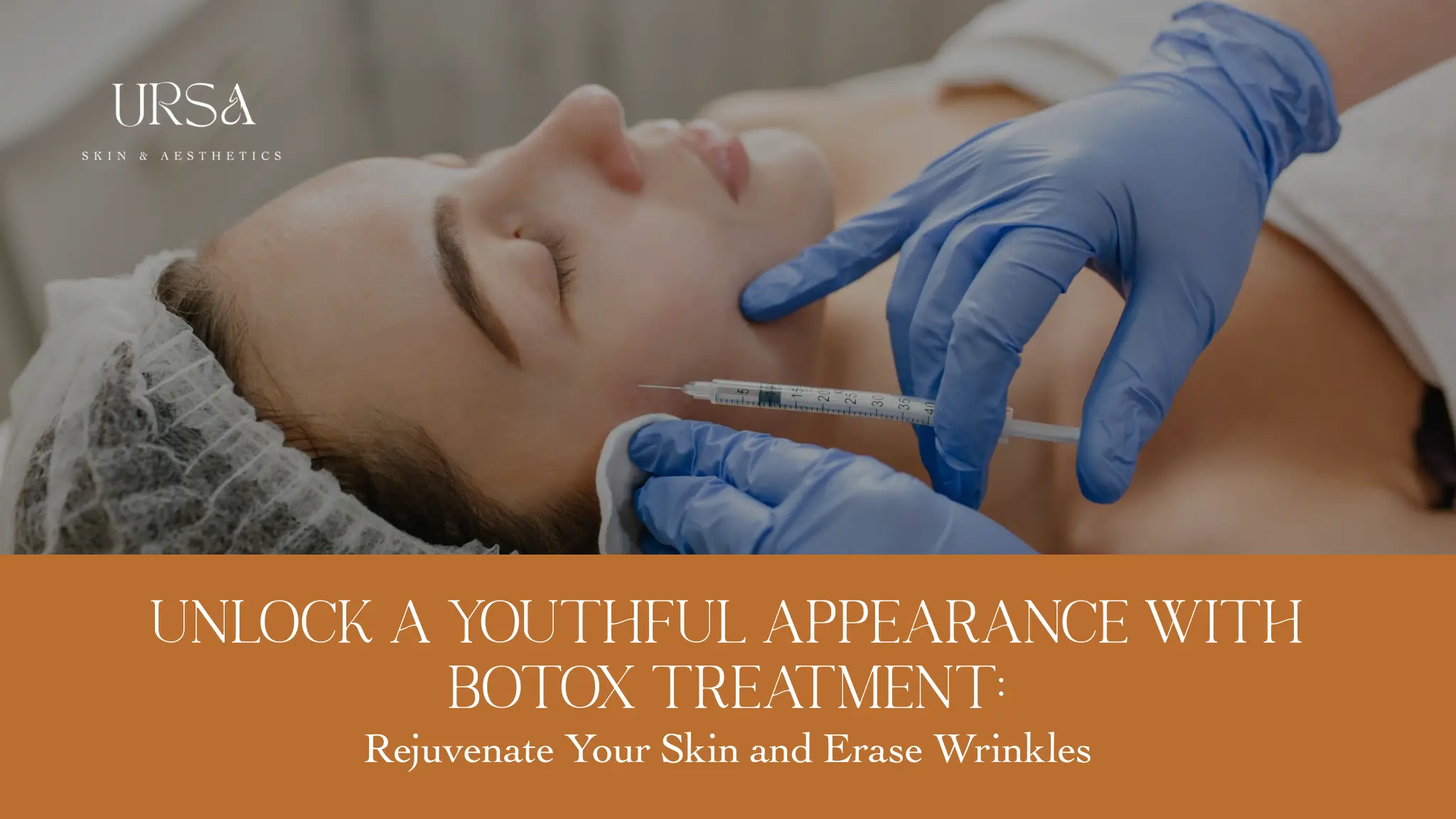
The injection process is quick, typically 15 to 30 minutes. Fine needles deliver precise amounts of Botox to targeted muscle points. Minimal discomfort is experienced. No anaesthesia is required, though a topical numbing cream can be applied if preferred. You can return to your normal activities immediately.
The Results
Early relaxation of treated muscles begins within 2 to 3 days. The full, visible anti-aging effect is present at day 10 to 14 and lasts 3 to 4 months initially, extending with regular treatment. Most patients describe looking in the mirror after their first Botox treatment and noticing that they look exactly like themselves — just more rested, less stressed, and noticeably more youthful.
8. Choosing the Right Botox Clinic for Anti-Aging
The quality of anti-aging Botox results depends almost entirely on the skill, experience, and aesthetic sensibility of the injector. Choosing the right clinic is a decision that should never be made on price alone.
Seek out a clinic staffed by qualified aesthetic physicians with specific training in facial anatomy and anti-aging medicine. Ask to see before and after photographs specifically of anti-aging Botox cases rather than the dramatic single-area shots often used in marketing. Natural-looking results that make patients appear refreshed rather than treated are the hallmark of genuine skill. At Ursa Skin, our Botox in Gurgaon and Botox in Delhi services are delivered by experienced doctors who have performed thousands of successful treatments. Research published in the Journal of Clinical and Aesthetic Dermatology confirms that practitioner experience is the primary determinant of both safety and aesthetic quality in botulinum toxin therapy.
9. Aftercare and Maximising Your Youthful Results
The steps you take after Botox treatment and between sessions significantly influence how long your results last and how comprehensively they address your anti-aging goals.
Immediately after treatment, remain upright for 4 hours, avoid touching or rubbing the treated areas, and refrain from strenuous exercise for 24 hours. These steps prevent the Botox from migrating to unintended muscles. In the weeks following treatment, maintain a rigorous SPF routine as UV exposure accelerates skin ageing and shortens the functional lifespan of your results. Schedule your next treatment 3 to 4 months after the current session to maintain continuous results and prevent lines from fully re-establishing.
For comprehensive anti-aging maintenance, complement your Botox with monthly HydraFacial sessions for skin quality, periodic chemical peels for resurfacing and brightening, and skin booster injections for deep dermal hydration. This multi-modal approach produces consistently exceptional results that single-treatment patients cannot achieve. Consider also our IV drip therapy for nutritional support that promotes skin health from within.
Key Takeaways
- Botox creates a youthful appearance by relaxing the muscles responsible for dynamic wrinkles and tension-driven facial ageing.
- Classic anti-aging zones include the forehead, glabellar area, and crow’s feet; advanced techniques add brow lifting, Nefertiti neck lift, and masseter slimming.
- Results appear within days and last 3 to 6 months, improving progressively with regular maintenance.
- Botox is most powerful for anti-aging when combined with fillers, HIFU, skin boosters, and resurfacing treatments.
- Natural-looking results require an experienced, medically qualified injector with genuine aesthetic sensibility.
- Starting Botox preventively in the 20s and 30s is the most effective long-term anti-aging strategy available today.
10. Ursa Skin Serves Patients Across Delhi NCR
Ursa Skin is one of the most trusted destinations for anti-aging Botox treatment in the Delhi NCR region. Our team of experienced aesthetic physicians delivers personalised Botox protocols designed to produce the most natural, refreshed, and long-lasting rejuvenation possible at our Gurgaon and Delhi clinics.
11. Related Reading
12. Frequently Asked Questions
How quickly does Botox make you look younger?
Botox begins to produce visible results within 3 to 5 days of treatment, with the full rejuvenating effect visible at day 10 to 14. The softening of dynamic wrinkles, relaxation of tight muscles, and subtle brow lifting create a refreshed, rested, and more youthful appearance that most patients first notice in the mirror within the first week.
Will Botox make me look frozen or unnatural?
Botox administered by a skilled and experienced practitioner should not produce a frozen or unnatural appearance. The goal of expert Botox treatment is to reduce unwanted muscle movement while preserving the natural range of facial expression. The dosage and injection points are carefully calibrated to each individual’s facial anatomy and expression patterns.
At what age should I start Botox for anti-aging?
There is no single correct age to start Botox. Many practitioners recommend considering Botox when fine lines begin appearing at rest, typically in the mid-to-late 20s or early 30s. Starting earlier with small, preventive doses can slow the development of permanent wrinkles. The right time depends on your individual skin, genetics, and lifestyle rather than a specific age.
Can Botox lift sagging skin?
Botox cannot lift skin that has become lax due to volume loss or tissue descent — this requires treatments such as HIFU, thread lift, or fillers. However, Botox can create a subtle brow lift and a Nefertiti lift using Botox in the neck and jawline can improve jawline definition and reduce the appearance of neck banding.
How long do Botox anti-aging results last?
Botox anti-aging results typically last 3 to 4 months for first-time patients. With regular treatments, many patients find their results last 4 to 6 months as the treated muscles weaken progressively with repeated treatment. Scheduling treatments before the effects have completely worn off helps maintain consistent results over time.
What is the difference between Botox and anti-aging creams?
Anti-aging creams work at the surface level to improve hydration, texture, and in some cases stimulate collagen production over time. Botox works at the neuromuscular level by blocking the nerve signals that cause muscle contractions and dynamic wrinkles. Botox produces visible, measurable results within days that creams alone cannot achieve. The two approaches are complementary — good skincare maximises and extends Botox results.
Is Botox safe to use regularly for anti-aging?
Yes. Botox has a well-established safety profile developed over decades of clinical use. Regular Botox treatments every 3 to 6 months are considered safe for most adults in good health when administered by a qualified medical professional. Long-term use is associated with progressive improvement in results as treated muscles weaken over time.
What facial areas benefit most from anti-aging Botox?
The areas that show the most dramatic anti-aging improvement with Botox are the forehead (horizontal lines), the glabellar zone between the eyebrows (frown lines), and the crow’s feet at the outer corners of the eyes. The brow lift, lip flip, and Nefertiti neck lift are additional applications that contribute significantly to overall facial rejuvenation.