

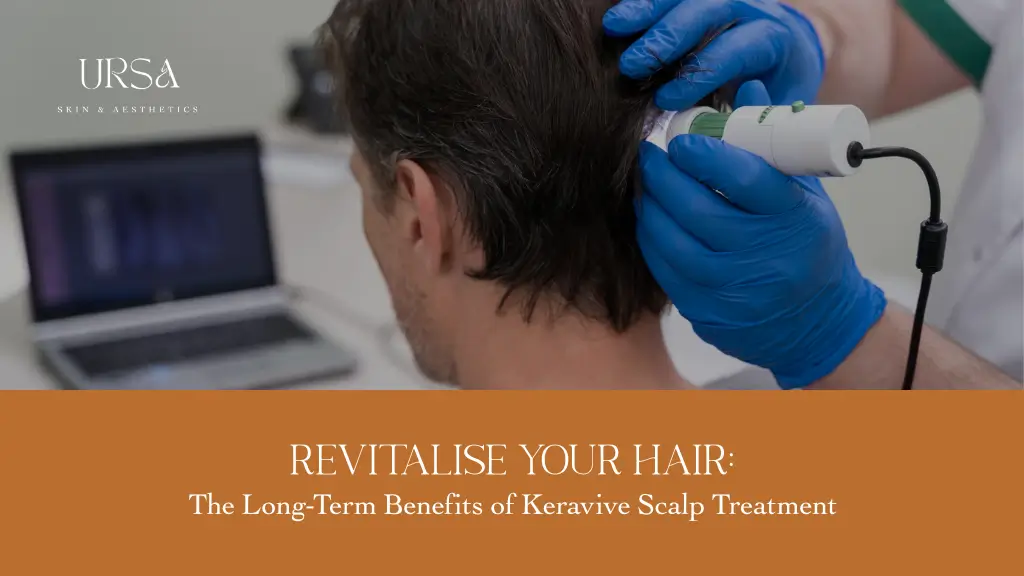
- Keravive uses HydraFacial technology to deeply cleanse and nourish the scalp; PRP injects concentrated growth factors to stimulate follicle activity directly.
- Keravive addresses the scalp environment and hair quality; PRP targets the biological root causes of hair thinning and loss.
- The two treatments are not competitors — they work on complementary aspects of scalp and hair health and produce superior results when combined.
- Keravive is non-invasive and needle-free; PRP involves scalp injections under topical anaesthesia.
- For active hair loss, PRP is the primary treatment; Keravive supports scalp health and enhances PRP effectiveness.
- Ursa Skin offers both Keravive and PRP at our Gurgaon and Delhi clinics with personalised hair health planning.
- Overview: Keravive and PRP
- How Keravive Works
- How PRP Works for Hair
- Keravive vs PRP: Head-to-Head Comparison
- When Keravive Is the Right Choice
- When PRP Is the Right Choice
- Combining Keravive and PRP for Best Results
- What to Expect at Your Treatment
- Aftercare and Maintenance
- Ursa Skin Serves Patients Across Delhi NCR
- Related Reading
- Frequently Asked Questions
When patients arrive at Ursa Skin concerned about thinning hair, excessive shedding, or poor scalp health, one of the most common questions we receive is whether Keravive or PRP is the better treatment for their hair. It is a natural question, but like many comparisons in aesthetic medicine, the framing slightly misses the point. Keravive and PRP are not competing alternatives — they are two fundamentally different treatments that address complementary aspects of hair and scalp health, and the most effective approach frequently involves both.
This guide provides a clear, clinically accurate comparison of Keravive scalp treatment and PRP for hair loss, explaining what each treatment does, who benefits most from each, and how combining them creates a comprehensive hair health programme that delivers results neither can achieve independently.
1. Overview: Keravive and PRP
Before comparing the two treatments in detail, it is important to understand what each one fundamentally addresses and why that distinction matters for treatment selection.
Keravive is a scalp health treatment. It uses the same HydraFacial technology adapted for the scalp to deeply cleanse, exfoliate, and nourish the scalp environment. Its primary objective is to create the healthiest possible scalp condition — removing the buildup, inflammation, and nutritional deficits that can impair follicle function and reduce hair quality. Keravive does not directly stimulate follicle biology; it optimises the environment in which follicles operate.
PRP (Platelet-Rich Plasma) is a follicle stimulation treatment. It uses the patient’s own concentrated blood-derived growth factors, injected directly into the scalp at the level of the follicles, to directly stimulate hair follicle activity, prolong the anagen growth phase, and slow the miniaturisation process in androgenetic alopecia. PRP addresses the biological processes causing hair loss, not just the scalp environment.
Simple Analogy: Think of the scalp as farmland. Keravive prepares and nourishes the soil. PRP waters and feeds the individual plants. Both are needed for the best harvest, and soil quality directly determines how well the fertiliser works.
2. How Keravive Works
The Keravive scalp treatment follows a three-step protocol that mirrors the HydraFacial approach applied specifically to the scalp environment.
Step 1: Scalp Cleansing and Exfoliation
The HydraFacial handpiece fitted with a specialised scalp attachment delivers a vortex of water and exfoliating solution to the scalp surface. This removes the accumulated sebum, dead skin cells, product buildup, and environmental debris that collect around follicle openings and can impair their function. Many patients with scalp buildup, seborrheic dermatitis, or simply infrequent professional scalp cleansing have a surprising amount of material removed during this step, which is visible in the waste receptacle of the device.
Step 2: Growth Factor and Peptide Infusion
Following the cleansing step, a proprietary Keravive serum containing human growth factors (including EGF, bFGF, and VEGF), biomimetic peptides, and scalp-nourishing actives is delivered into the freshly cleansed scalp through the same vortex technology. These growth factors support scalp cell health, improve microcirculation in the scalp vasculature, and create a more supportive biological environment for follicle activity.
Step 3: Take-Home Spray Maintenance
Each Keravive session includes a take-home spray containing the same growth factors and peptides used in the clinic. Patients apply this spray once daily for 30 days following each session, extending the scalp nourishment benefit between clinic appointments. This home maintenance component is a distinctive feature of the Keravive system that differentiates it from a simple scalp facial. Visit our Keravive scalp treatment page for full details.
3. How PRP Works for Hair
PRP therapy for hair loss operates at the biological level of the hair follicle itself, stimulating the cellular processes that govern hair growth, thickness, and longevity through concentrated growth factor delivery.
A sample of the patient’s own blood is drawn and centrifuged to produce a plasma fraction highly concentrated in platelets and their associated growth factors. This platelet-rich plasma is then injected across the scalp in a systematic pattern at the depth of the hair follicle bulb. The growth factors released by the platelets — including PDGF, VEGF, TGF-beta, and IGF-1 — directly stimulate follicle stem cells, improve the blood supply to the follicle papilla, reduce the inflammatory factors that contribute to follicle miniaturisation in androgenetic alopecia, and extend the anagen (active growth) phase of the hair cycle. The result over a course of sessions is reduced shedding, thicker hair shafts, and visible improvement in hair density. Explore our detailed article on PRP vs hair transplant and our guide to proven hair fall treatment options.
4. Keravive vs PRP: Head-to-Head Comparison
| Feature | Keravive | PRP for Hair |
|---|---|---|
| Primary mechanism | Scalp cleansing and exogenous growth factor nourishment | Autologous growth factor follicle stimulation |
| Invasiveness | Non-invasive, no needles | Multiple scalp injections |
| Target | Scalp environment and hair quality | Hair follicle biology and growth cycle |
| Best for | Scalp health, hair quality, mild thinning | Androgenetic alopecia, telogen effluvium |
| Discomfort | None | Mild with topical numbing |
| Session duration | 45 to 60 minutes | 45 to 60 minutes |
| Downtime | None | Minimal (mild tenderness 24 hours) |
| Home maintenance | Yes (take-home spray) | No specific home component |
| Frequency | 3 sessions then every 2 to 3 months | 3 to 4 sessions then every 3 to 6 months |
5. When Keravive Is the Right Choice
Keravive is the ideal primary choice for several specific scalp and hair concerns where the scalp environment is the primary limiting factor rather than active follicle loss.
Scalp Buildup and Congestion
Patients with significant seborrheic dermatitis, scalp psoriasis, or simply heavy product buildup that is physically blocking follicle openings benefit enormously from Keravive’s deep cleansing action. Removing this physical barrier to follicle function can produce rapid improvements in hair quality, scalp comfort, and hair growth efficiency without any need for injectable treatments.
Hair Quality Concerns
Patients experiencing poor hair quality — dull, brittle, thin-looking hair — without significant active shedding or baldness often have scalp health issues at the root of their concerns. The growth factor and peptide infusion in Keravive directly nourishes the follicle environment, improving the quality of hair produced by each follicle. Results include improved hair shine, reduced breakage, and a general improvement in hair texture and manageability that many patients find transformative.
Patients Who Cannot Tolerate Injections
For patients who are needle-averse or who have medical conditions that contraindicate injectable treatments, Keravive provides a meaningful non-invasive hair health intervention. The take-home spray further extends the treatment benefit between clinic sessions without any additional clinic visits or invasive procedures.
Book Your Hair Health Assessment at Ursa Skin
Our hair specialists will assess your scalp condition and hair loss pattern to recommend the right combination of Keravive, PRP, and supportive treatments for your individual needs.
6. When PRP Is the Right Choice
PRP is the primary clinical choice when the concern is active hair loss driven by biological follicle dysfunction rather than scalp environment issues alone.
Androgenetic Alopecia
For patients with male or female pattern hair loss driven by DHT-related follicle miniaturisation, PRP directly addresses the biology of the condition. The growth factors in PRP counteract the miniaturisation process, extend the anagen phase, and improve follicle resilience against DHT. A course of PRP sessions is one of the most evidence-based non-surgical approaches to androgenetic alopecia available today. Keravive can support PRP effectiveness but cannot substitute for it in this indication. Learn more about PRP as one of our leading proven hair fall treatment options.
Telogen Effluvium
Diffuse hair shedding triggered by stress, illness, nutritional deficiency, or hormonal change responds well to PRP. The scalp-wide growth factor stimulation supports follicle recovery and accelerates the return to the active growth phase. Read our comprehensive article on hair transplant myths vs facts for context on the full spectrum of hair loss treatment approaches.
Post-Transplant Maintenance
Following a hair transplant procedure, PRP sessions support graft survival, accelerate the growth phase of transplanted hairs, and maintain the health of surrounding native hair. Keravive sessions in this context provide excellent scalp health maintenance between PRP treatments, keeping the post-transplant scalp environment clean and nourished. For a full comparison of hair restoration approaches, visit our article on PRP vs hair transplant.
7. Combining Keravive and PRP for Best Results
The most comprehensive and effective approach to hair and scalp health frequently uses both Keravive and PRP in a coordinated programme. Understanding how they complement each other in practice helps clarify why their combination produces results that neither treatment achieves alone.
Keravive as Foundation, PRP as Active Treatment
The most logical treatment architecture places Keravive in the role of ongoing scalp health maintenance, performed every 2 to 3 months to keep the scalp clean, well-nourished, and free of the buildup that can impair follicle function. PRP is performed on its own schedule of 3 to 4 initial sessions followed by quarterly maintenance, providing the direct follicle stimulation that addresses active hair loss. Scheduling a Keravive session in the week before a PRP session creates the cleanest, most receptive scalp environment for the injected growth factors, potentially enhancing PRP outcomes.
Adding GFC for Enhanced Stimulation
For patients who want the most comprehensive hair health programme, adding GFC (Growth Factor Concentrate) therapy as a more potent alternative or addition to PRP creates an exceptionally powerful combination. GFC delivers a higher concentration of specific hair-stimulating growth factors than standard PRP. A programme of Keravive for scalp health plus GFC for follicle stimulation represents the most advanced non-surgical hair health protocol available at Ursa Skin. Explore our in-depth comparison of GFC therapy for hair loss.
8. What to Expect at Your Treatment
Both Keravive and PRP sessions at Ursa Skin follow structured protocols designed for comfort and optimal outcomes.
Keravive Session Experience
A Keravive session begins with assessment of the scalp condition. The HydraFacial scalp handpiece is moved systematically across the entire scalp in overlapping passes during the cleansing phase — most patients describe a relaxing massaging sensation. The growth factor infusion is delivered in the same manner. The entire in-clinic session takes 45 to 60 minutes. You will receive your take-home spray at the end of the session with instructions for daily application. There is no redness, tenderness, or restriction on washing the hair or styling immediately after treatment.
PRP Session Experience
A PRP session begins with a blood draw from the arm, which is centrifuged while topical numbing cream is applied to the scalp. The PRP is then injected systematically across the scalp using a fine needle. Most patients experience mild pressure or mild stinging during injections, well-managed by the topical numbing. The scalp may feel tender for 12 to 24 hours after PRP. Hair can be washed normally from the following day. Full details are available on our PRP for hair loss treatment page.
9. Aftercare and Maintenance
Both treatments require minimal aftercare and can be integrated into an active lifestyle without significant disruption.
After Keravive, apply the take-home spray once daily to a clean, dry scalp as instructed. Avoid heavy styling products directly on the scalp for 24 hours after the session to allow the infused growth factors to absorb without being diluted or blocked. Continue using gentle, scalp-friendly shampoos between sessions to maintain the cleansing benefit achieved in the clinic. Supplement your programme with scalp-specific nutrition including biotin, iron, zinc, and vitamin D as recommended by your Ursa Skin hair specialist.
After PRP, avoid strenuous exercise, alcohol, and saunas for 24 hours to minimise scalp inflammation. Use gentle, sulfate-free shampoo for the first wash. Avoid applying any chemical treatments such as hair colour or relaxers for 7 days after PRP. Schedule your next PRP session 4 to 6 weeks after the previous one during the initial course. Between PRP sessions, maintain overall scalp health with the Keravive take-home spray and a scalp-nourishing routine. Consider adding mesotherapy treatment as an additional nutritional support therapy for your hair follicles. For broader hair health guidance, read our comprehensive article on proven hair fall treatment options.
Schedule your Keravive session 3 to 5 days before your PRP session. A freshly cleansed, well-nourished scalp provides a more receptive environment for PRP growth factors, potentially improving follicle stimulation outcomes.
Key Takeaways
- Keravive and PRP treat complementary aspects of hair and scalp health — they are partners, not competitors.
- Keravive optimises the scalp environment through deep cleansing and growth factor nourishment; PRP stimulates follicle biology directly through injected growth factors.
- For active hair loss, PRP is the primary treatment; Keravive supports scalp health and enhances PRP effectiveness.
- For scalp health and hair quality concerns without significant active loss, Keravive alone or combined with PRP is highly beneficial.
- Combining Keravive, PRP or GFC, and medical treatments creates the most comprehensive non-surgical hair health programme.
- Regular maintenance of both treatments sustains results and progressively improves scalp health and hair density over time.
10. Ursa Skin Serves Patients Across Delhi NCR
Ursa Skin offers both Keravive scalp treatment and PRP therapy at our Gurgaon and Delhi clinics, along with the full range of complementary hair health treatments. Our hair specialists will design a personalised combination programme that addresses your specific scalp condition, hair loss pattern, and goals.
11. Related Reading
12. Frequently Asked Questions
What is the difference between Keravive and PRP for hair?
Keravive uses HydraFacial technology to cleanse, exfoliate, and nourish the scalp environment with a blend of growth factors and biomimetic peptides. PRP uses the patient’s own concentrated blood-derived growth factors injected directly into the scalp to stimulate hair follicle activity. Keravive optimises the scalp foundation; PRP directly stimulates follicle biology. They address complementary aspects of hair health and work exceptionally well together.
Is Keravive a treatment for hair loss?
Keravive is primarily a scalp health treatment that creates an optimal environment for hair growth rather than a direct hair loss treatment. It is most effective for patients with hair quality issues, scalp buildup, or inflammation contributing to poor hair condition. For active androgenetic alopecia, Keravive works best as a complement to PRP, GFC therapy, or medical treatments rather than as a standalone solution.
How many Keravive sessions are needed?
A standard Keravive protocol consists of 3 in-clinic sessions spaced 4 weeks apart, followed by daily use of the included Keravive take-home spray for 30 days after each session. Maintenance sessions every 2 to 3 months thereafter sustain scalp health and hair quality improvements.
Can Keravive and PRP be done at the same time?
Yes. Keravive and PRP are highly complementary and can be scheduled in the same overall treatment programme, though they are typically performed on different appointment days. Keravive creates a clean, well-nourished scalp environment that allows PRP growth factors to interact more effectively with follicles.
Does Keravive hurt?
Keravive is a non-invasive, comfortable treatment with no needles and no downtime. The HydraFacial handpiece used for scalp cleansing creates a mild suction sensation that most patients find comfortable or even relaxing. There is no pain during or after the treatment.
Is PRP for hair painful?
PRP for hair involves multiple small injections across the scalp, which can cause mild discomfort. A topical numbing cream is applied beforehand to reduce sensation significantly. Most patients describe the treatment as tolerable, with a slight pressure or stinging feeling during injection that resolves quickly after the session.
What results can I expect from Keravive?
Patients undergoing Keravive typically report improvements in scalp comfort, reduced flaking and irritation, improved hair shine and texture, and a cleaner, healthier-feeling scalp after completing the initial 3-session course. Hair quality improvements including less breakage and increased volume are commonly reported when Keravive is used alongside PRP or medical hair treatments.
Who should choose PRP over Keravive for hair concerns?
Patients with active androgenetic alopecia, significant hair thinning, or telogen effluvium causing notable shedding should prioritise PRP as their primary treatment. Keravive can be added as a scalp health companion. Patients whose primary concern is scalp condition or hair quality without active follicle loss may find Keravive alone provides meaningful benefit.