

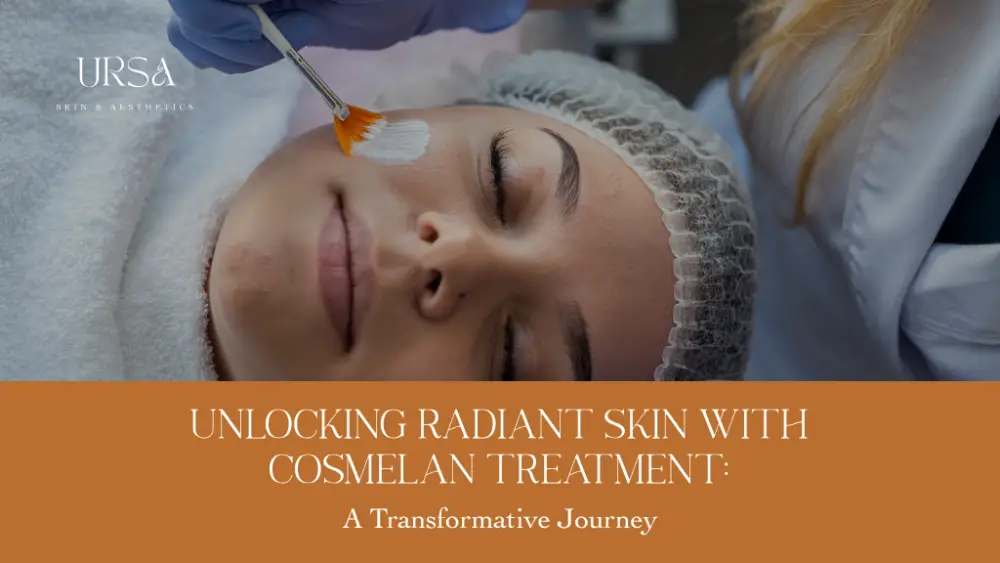
- Cosmelan is the world’s leading professional depigmentation protocol, clinically validated for all skin types including darker Indian skin tones.
- It addresses melasma, post-inflammatory hyperpigmentation, sunspots, and general uneven skin tone through a multi-pathway melanin inhibition mechanism.
- The protocol combines an in-clinic mask application with a 6 to 12 month home maintenance programme using Cosmelan 2 cream.
- Clinical studies report up to 95% patient satisfaction for melasma and pigmentation improvement with the full Cosmelan protocol.
- A recovery period of 2 to 4 weeks of peeling and redness should be expected and planned for after the initial mask application.
- Ursa Skin offers medically supervised Cosmelan treatment in Gurgaon and Delhi with comprehensive pre and post-treatment care.
- What Is Cosmelan Treatment?
- How Cosmelan Works: Multi-Pathway Depigmentation
- Skin Concerns Cosmelan Addresses
- The Cosmelan Protocol: Step by Step
- Cosmelan vs Other Pigmentation Treatments
- Who Is Suitable for Cosmelan?
- What to Expect: Results and Timeline
- Choosing the Right Clinic for Cosmelan
- Aftercare: The Critical Role of Sun Protection
- Ursa Skin Serves Patients Across Delhi NCR
- Related Reading
- Frequently Asked Questions
Hyperpigmentation is one of the most persistent and emotionally impactful skin concerns in aesthetic medicine, particularly for patients with medium to dark skin tones. Whether caused by melasma, post-acne marks, sun damage, or hormonal fluctuations, uneven pigmentation can be frustratingly resistant to standard skincare and surface treatments. For these patients, Cosmelan represents one of the most significant clinical breakthroughs in depigmentation medicine — a comprehensive, medically validated protocol that addresses melanin overproduction at its root and delivers the kind of transformation that years of topical treatment alone cannot achieve.
At Ursa Skin, our Cosmelan treatment protocol is delivered under the direct supervision of our qualified medical team, with careful pre-treatment preparation and comprehensive post-treatment support to ensure the safest and most impressive results possible. This guide explains everything you need to know about how Cosmelan works and what to expect from your treatment journey.
1. What Is Cosmelan Treatment?
Cosmelan is a professional depigmentation system developed by the Spanish cosmetic pharmaceutical company Isdin (formerly marketed under the mesoestetic brand). It is the world’s most widely used professional depigmentation protocol, available exclusively through authorised medical and aesthetic clinics. Cosmelan is not an over-the-counter product — it requires clinical application and ongoing medical supervision for safe and effective use.
The Cosmelan system consists of two components: the Cosmelan 1 mask, which is applied in-clinic as a highly concentrated depigmenting agent, and the Cosmelan 2 cream, a home maintenance formulation used daily for 6 to 12 months after the mask application to regulate ongoing melanin production and prevent recurrence. Together, these two components deliver what no single treatment session alone can achieve: a comprehensive reset of the skin’s melanin production pathway combined with a sustained maintenance effect that prevents pigmentation from returning.
Clinical Validation: Cosmelan has been the subject of numerous peer-reviewed clinical studies, with data published in dermatology journals including the Journal of the American Academy of Dermatology demonstrating 95% patient satisfaction rates and significant improvement in melasma area and severity index (MASI) scores after the full protocol.
2. How Cosmelan Works: Multi-Pathway Depigmentation
The reason Cosmelan is so effective compared to individual depigmenting ingredients is that it addresses melanin overproduction through multiple simultaneous pathways rather than a single mechanism. This comprehensive approach allows Cosmelan to overcome the resistance that melanin production often shows to single-agent treatments.
Tyrosinase Inhibition
The primary pathway of melanin synthesis begins with the enzyme tyrosinase, which catalyses the conversion of the amino acid tyrosine into the precursors of melanin pigment. Multiple active ingredients in Cosmelan — including kojic acid, phytic acid, and azelaic acid — inhibit tyrosinase through different molecular mechanisms. This multi-agent inhibition of the same enzyme is significantly more effective than any single tyrosinase inhibitor, making Cosmelan highly potent against the melanin synthesis pathway at its source.
Melanin Transfer Inhibition
Even when melanin is produced in melanocytes, it must be transferred to surrounding keratinocytes before it becomes visible as pigmentation on the skin surface. Cosmelan ingredients including niacinamide and specific peptides interfere with this transfer process, reducing the amount of melanin that reaches the surface even when some production continues.
Keratinocyte Renewal
The exfoliating components of Cosmelan accelerate the turnover of the outermost skin layers, removing already-pigmented keratinocytes more rapidly than normal desquamation allows. This surface renewal effect produces faster visible lightening of existing pigmentation while the melanin inhibition pathways work to prevent new pigment formation simultaneously.
Anti-Inflammatory Action
Post-inflammatory hyperpigmentation is driven partly by inflammatory mediators that stimulate melanocyte activity. Cosmelan ingredients with anti-inflammatory properties reduce this inflammatory stimulus, making the treatment particularly effective for PIH from acne or other inflammatory triggers.
3. Skin Concerns Cosmelan Addresses
Cosmelan is indicated for the treatment of a wide spectrum of hyperpigmentation disorders, making it one of the most versatile professional depigmentation tools available.
Melasma
Melasma is the most common indication for Cosmelan treatment. Characterised by symmetrical, irregular brown patches on the cheeks, forehead, and upper lip, melasma is driven by a combination of UV exposure, hormonal factors, and genetic predisposition. It is notoriously difficult to treat and frequently recurs after conventional therapies. Cosmelan’s multi-pathway approach and the sustained regulation provided by the Cosmelan 2 home maintenance cream make it uniquely effective for this challenging condition. For complementary options, explore our Pico laser treatment as an adjunct to Cosmelan for stubborn melasma.
Post-Inflammatory Hyperpigmentation
The dark marks left by acne breakouts, insect bites, injuries, or any inflammatory skin event are highly responsive to Cosmelan treatment. The combination of exfoliation to remove existing PIH and melanin synthesis inhibition to prevent new pigment deposition produces significant and rapid improvement in post-acne dark marks that are the most common skin concern in Indian patients seeking aesthetic treatment.
Sun-Induced Pigmentation
Lentigines (sunspots), freckles, and diffuse photoageing-related pigmentation across the face, neck, and decolletage all respond well to Cosmelan. For patients with significant cumulative sun damage, Cosmelan provides the most comprehensive surface reset available outside of ablative laser resurfacing. Complement with our chemical peel treatments for ongoing maintenance after Cosmelan.
4. The Cosmelan Protocol: Step by Step
The Cosmelan protocol is a structured two-phase treatment that requires commitment, compliance, and careful adherence to instructions from both the clinic team and the patient throughout.
Pre-Treatment Preparation (2 to 4 Weeks)
Before the Cosmelan mask is applied, a pre-treatment protocol is essential to prepare the skin. This typically involves using a Cosmelan pre-treatment serum and beginning a skin conditioning programme with specific ingredients that prime the melanocytes for the depigmenting treatment, reduce baseline inflammation, and strengthen the skin barrier to improve tolerance of the intensive mask application. Sun avoidance and SPF 50+ use during this preparatory phase are essential.
In-Clinic Mask Application
The Cosmelan 1 mask is applied in clinic as a thick, paste-like layer across the full face or targeted areas of concern. The mask is left on for a prescribed period, typically 6 to 10 hours, which is determined by your skin type, the extent of pigmentation, and your individual skin’s tolerance. You leave the clinic with the mask on your skin and remove it at home at the specified time, following detailed written instructions provided by your clinician.
Home Maintenance Phase (6 to 12 Months)
The Cosmelan 2 maintenance cream is applied at home from the day after mask removal according to a frequency schedule that is gradually reduced over the maintenance period. Initially applied 3 times daily, the frequency is tapered to once daily and then every other day over the following months. This sustained home application is what distinguishes Cosmelan from a one-time treatment and is the key to both maximising initial results and preventing pigmentation recurrence. SPF 50+ application every morning is non-negotiable throughout the entire maintenance phase and beyond.
Transform Your Skin with Cosmelan at Ursa Skin
Book a Cosmelan consultation at our Gurgaon or Delhi clinic. Our expert team will assess your pigmentation, prepare your skin, and guide you through every step of the protocol for maximum results.
5. Cosmelan vs Other Pigmentation Treatments
Understanding how Cosmelan compares to other available pigmentation treatments helps contextualise its role in the treatment landscape and when it represents the best choice.
| Treatment | Mechanism | Best For | Downtime | Melasma Suitability |
|---|---|---|---|---|
| Cosmelan | Multi-pathway melanin inhibition | Melasma, PIH, sun damage | 2 to 4 weeks | Excellent |
| Chemical Peel | Exfoliation and surface renewal | Mild PIH, general brightening | 1 to 7 days | Moderate |
| Pico Laser | Photoacoustic pigment destruction | Discrete spots, PIH | Minimal | Moderate to good |
| Q-Switch Laser | Selective photothermolysis | Sunspots, lentigines | Minimal | Caution with darker skin |
| Topical Actives | Variable tyrosinase inhibition | Mild pigmentation maintenance | None | Limited for moderate melasma |
For moderate to severe melasma, post-inflammatory hyperpigmentation, and generalised photoageing-related discolouration, Cosmelan offers the most comprehensive and lasting depigmentation available without ablative laser resurfacing. It is particularly well-suited to patients who have tried multiple topical treatments without satisfactory results, those with darker skin tones where some laser options carry higher risks, and patients who want a definitive transformation rather than gradual improvement over many treatment cycles. Compare with our HydraFacial for pigmentation management as a gentler ongoing maintenance option.
6. Who Is Suitable for Cosmelan?
Cosmelan is broadly suitable for adults of all skin types, including darker Indian skin tones, making it one of the most inclusive professional depigmentation treatments available. However, certain patient profiles represent the ideal candidates for this intensive protocol.
Ideal Candidates
The ideal Cosmelan candidate is an adult with moderate to significant hyperpigmentation — melasma, post-inflammatory pigmentation, or photoageing — who has not achieved adequate results with standard topical treatments. Patients with darker skin types who cannot safely access more aggressive laser treatments find Cosmelan a highly effective alternative. Candidates should be able to commit to the full home maintenance protocol and rigorous sun protection required after treatment. Adults who can plan for 2 to 4 weeks of social recovery time after the initial mask application are the best-prepared patients.
Contraindications
Cosmelan is not recommended during pregnancy or breastfeeding, for patients currently on isotretinoin, for those with very sensitive or reactive skin conditions such as active rosacea or eczema in the treatment area, or for patients who cannot commit to the home maintenance protocol and daily SPF use. A thorough assessment at Ursa Skin prior to treatment ensures every patient is appropriately selected and fully prepared. Explore our full range of pigmentation treatments on our treatments page.
7. What to Expect: Results and Timeline
Setting accurate timeline expectations is essential for Cosmelan patients, as the treatment involves a significant initial recovery period followed by a gradual, progressive skin transformation over subsequent months.
Week 1 to 2: Initial Recovery
After mask removal, the skin will appear red, tight, and sensitive. Peeling and flaking begin within 2 to 5 days and continue for 1 to 2 weeks. The skin should not be picked or manually exfoliated during this period. Gentle cleansing and the prescribed Cosmelan 2 cream, along with generous application of the provided soothing moisturiser, are the only products that should be used during this phase. This initial recovery is a necessary part of the treatment — it is the old, pigmented surface cells shedding to reveal the newer, fresher skin beneath.
Weeks 3 to 6: Emerging Transformation
As the peeling resolves, the skin progressively reveals the beginning of the Cosmelan transformation. Pigmentation appears lighter and more faded, the overall tone is more even, and the skin surface has a fresher, more refined quality. Most patients report that their friends and family notice a significant improvement in their skin during this period even before they themselves have assessed their final results.
Months 2 to 12: Progressive Improvement
The melanin inhibition effect of Cosmelan 2 continues to reduce pigmentation production and refine the skin tone throughout the maintenance phase. Most patients reach their peak result at 3 to 6 months into the protocol. The combination of reduced melanin production and ongoing gentle exfoliation from the Cosmelan 2 cream creates a continuously improving trajectory that is one of the most rewarding treatment experiences we offer at Ursa Skin. The International Society of Aesthetic Plastic Surgery consistently recognises depigmentation protocols such as Cosmelan as among the highest patient satisfaction procedures in aesthetic medicine.
8. Choosing the Right Clinic for Cosmelan
Cosmelan is a potent treatment that requires expert clinical management to achieve safe, effective results. Choosing an authorised, medically supervised clinic is essential for optimal outcomes and patient safety.
Ensure the clinic is an authorised Cosmelan provider with direct access to genuine Isdin/mesoestetic products. Verify that treatment is performed and supervised by qualified medical professionals who can manage the post-treatment recovery period. At Ursa Skin, our Cosmelan programme includes pre-treatment skin preparation, mask application by our trained clinicians, comprehensive written and verbal aftercare instructions, and follow-up appointments during the recovery and maintenance phases. Our Cosmelan treatment in Gurgaon and Cosmelan treatment in Delhi pages have full programme details. The Dermatology Times emphasises that proper patient selection, preparation, and supervision are the key determinants of Cosmelan safety and outcomes.
9. Aftercare: The Critical Role of Sun Protection
Of all the aftercare guidelines for Cosmelan treatment, none is more important than rigorous and consistent sun protection. UV exposure is the primary trigger for melanin production and will directly counteract the depigmenting effects of the treatment if not consistently blocked.
Apply SPF 50+ broad-spectrum sunscreen every morning, including cloudy days and days spent primarily indoors near windows. Reapply every 2 hours when outdoors. Wear protective hats, sunglasses, and clothing when in direct sunlight. Avoid peak sun hours between 10 AM and 4 PM during the active treatment period. This sun protection commitment is not temporary — patients who achieve excellent Cosmelan results maintain those results through ongoing sun discipline. Those who return to unprotected sun exposure will see pigmentation return, particularly with melasma.
Beyond sun protection, maintain the Cosmelan 2 cream application schedule provided by your clinician, use only gentle, non-active skincare products during the initial recovery phase, and schedule follow-up appointments at 4 to 6 weeks, 3 months, and 6 months to assess progress and adjust the maintenance protocol. After the maintenance phase, incorporating regular HydraFacial sessions and periodic chemical peels helps sustain the brightening results long-term.
SPF protection during Cosmelan treatment is not optional — it is a medical requirement. UV exposure during active treatment significantly compromises results and can cause post-inflammatory pigmentation in freshly treated skin. Apply SPF 50+ every single morning without exception.
Key Takeaways
- Cosmelan is the world’s leading professional depigmentation protocol, addressing melanin overproduction through multiple simultaneous pathways.
- It is effective for melasma, post-inflammatory hyperpigmentation, sun damage, and general uneven skin tone in all skin types including darker Indian tones.
- The two-phase protocol combines an in-clinic mask application with 6 to 12 months of home maintenance using Cosmelan 2 cream.
- A 2 to 4 week recovery period with peeling and redness should be expected and planned for after the initial mask application.
- Rigorous daily SPF 50+ use is mandatory during and after treatment to prevent UV-triggered recurrence of pigmentation.
- Clinical studies report 95% patient satisfaction for melasma and pigmentation improvement with the full Cosmelan protocol.
10. Ursa Skin Serves Patients Across Delhi NCR
Ursa Skin is an authorised Cosmelan provider offering the complete, medically supervised Cosmelan protocol at our Gurgaon and Delhi clinics. Our clinical team has extensive experience with Cosmelan across all skin types and pigmentation presentations, ensuring safe, effective treatment with comprehensive before, during, and after care.
11. Related Reading
12. Frequently Asked Questions
What skin concerns does Cosmelan treat?
Cosmelan is specifically designed to treat hyperpigmentation disorders including melasma, post-inflammatory hyperpigmentation from acne or injury, sun-induced dark spots, uneven skin tone, and general skin dullness. It is effective for all Fitzpatrick skin types including darker Indian skin tones.
How long does Cosmelan treatment last?
The depigmentation results from a Cosmelan protocol can last 12 to 24 months or longer with proper maintenance and consistent sun protection. The Cosmelan 2 home maintenance cream continues to regulate melanin production after the initial treatment, and regular SPF use prevents UV-triggered recurrence of pigmentation.
Is Cosmelan safe for Indian skin?
Yes. Cosmelan is specifically formulated and clinically validated for use across all Fitzpatrick skin types, including the medium to dark Indian skin tones where other depigmentation treatments carry higher risks. The treatment protocol includes specific adaptations and guidance for darker skin types to maximise safety and efficacy.
What is the downtime after Cosmelan?
Cosmelan involves a significant recovery period of 2 to 4 weeks. During the first week after mask removal, the skin appears red, dry, and begins to peel and flake as superficial pigmented skin cells shed. By weeks 2 to 4, the peeling resolves and the skin progressively reveals a brighter, more even complexion. Plan to schedule the treatment when you have flexibility in your social schedule.
Can Cosmelan treat melasma?
Yes. Cosmelan is one of the most effective treatments for melasma available. It targets melanin production through multiple pathways simultaneously, addressing the overactive melanocytes responsible for melasma. Clinical studies report 95% patient satisfaction rates for melasma improvement with the Cosmelan protocol.
How many Cosmelan treatments are needed?
A single Cosmelan in-clinic mask application forms the foundation of the treatment, followed by the ongoing home maintenance protocol using Cosmelan 2 cream for 6 to 12 months. For most patients, one full Cosmelan protocol produces significant and lasting results. Some patients with very stubborn pigmentation may benefit from a second application after 6 to 12 months.
Can Cosmelan be combined with other pigmentation treatments?
Yes, but timing and sequencing are critical. Cosmelan is typically used as a standalone intensive protocol first. Once the skin has stabilised after the initial healing period (usually 4 to 8 weeks), complementary treatments such as chemical peels, HydraFacial, or laser toning can be introduced to further enhance and maintain results.
What sun protection is needed during Cosmelan treatment?
SPF 50+ broad-spectrum sunscreen must be applied every morning during and after Cosmelan treatment without exception. UV exposure is the primary trigger for melanin production and can reactivate pigmentation even while the Cosmelan protocol is working. Reapplication every 2 hours when outdoors is strongly recommended.