

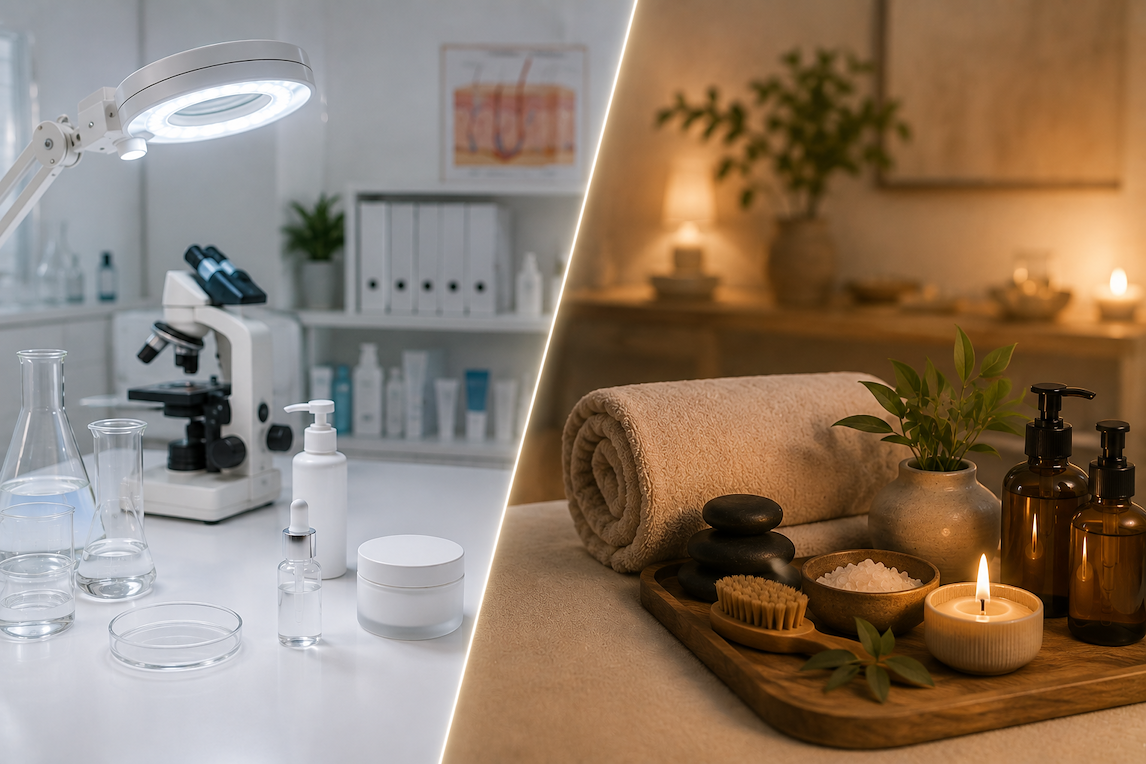
KEY HIGHLIGHTS
| • Spas and dermatology clinics can offer similarly-named treatments with very different levels of medical oversight. • The biggest difference isn’t the treatment menu — it’s who is diagnosing your skin before you’re treated. • For anything beyond a basic facial, the diagnosis matters as much as the treatment itself. |
It’s easy to assume a “skin treatment” is a skin treatment, whether you book it at a spa or a dermatology clinic. In practice, the two are built around different goals, different training, and different levels of medical oversight — and for anything beyond relaxation, that difference shows up in your results.
Myth: A Facial Is a Facial, Wherever You Get It
Fact: The treatment name can be identical — “chemical peel,” “laser toning,” “HydraFacial” — while the strength, technology, and protocol behind it vary enormously. A spa is generally staffed by trained aestheticians offering a curated, comfort-focused menu. A dermatology clinic is led by a qualified MD dermatologist who can diagnose the underlying skin condition, not just apply a treatment to it.
Myth: Diagnosis Doesn’t Matter for Something Like Pigmentation or Acne
Fact: It’s often the single biggest factor in whether treatment actually works. Melasma and sun spots, for example, look similar but need opposite approaches — treating one like the other can make things worse, not better. A dermatologist is trained to tell them apart before recommending anything; a standard spa menu isn’t built around that distinction.
Myth: Stronger Technology Is Always Better, Regardless of Where You Get It
Fact: Medical-grade lasers and peels require both the right equipment and the judgment to use it safely on your specific skin. This is exactly where genuine, USFDA-approved technology and physician
oversight matter — the equipment behind a treatment, and who’s operating it, changes both the results and the risk.
Myth: You Only Need a Dermatologist for ‘Serious’ Skin Problems
Fact: Even routine concerns — persistent acne, uneven tone, early signs of ageing — respond better when the underlying cause is actually identified first. A spa treatment can feel good and still miss the reason your skin looks the way it does.
When a Spa Is the Right Choice — and When It Isn’t
For general relaxation and light maintenance, a spa facial is a perfectly reasonable choice. But for anything with a medical component — pigmentation, active acne, hair loss, visible ageing, anything you want an actual, lasting result from — a dermatologist-led consultation gives you a diagnosis first, and a treatment plan built around it second.
At URSA, every treatment plan starts with an MD dermatologist’s assessment, not a menu. [Link to: Homepage / About Us]
None of this means spas don’t have their place. It just means the two aren’t interchangeable — and knowing which one your concern actually needs is the first useful decision you can make.