

KEY HIGHLIGHTS
| • Humidity, sweat, and inconsistent sun protection combine to make monsoon a high-risk season for pigmentation. • UV rays pass through clouds — ‘no sun’ weather doesn’t mean no UV exposure. • Most monsoon pigmentation flare-ups are preventable with a few consistent habits, not a treatment overhaul. |
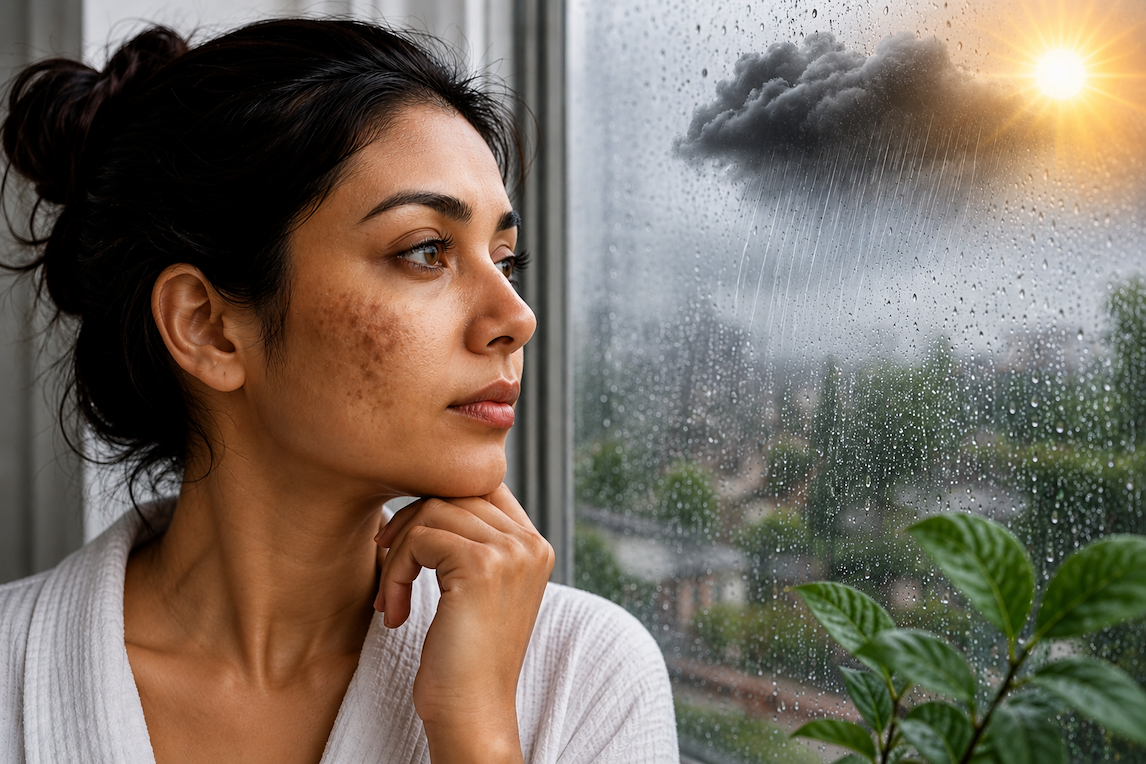
Monsoon feels like a break from the sun — the sky is overcast, the heat is down, and sunscreen starts to feel optional. That assumption is exactly why pigmentation tends to flare up during these months. The causal chain is simple: humidity, sweat, and inconsistent sun protection combine to create the same conditions pigmentation thrives in, just less obviously than a scorching summer afternoon.
UV Rays Don’t Take a Break for Clouds
This is the single biggest myth of the season. UV-A rays — the ones responsible for tanning and pigmentation — pass through cloud cover with very little loss of intensity. A grey, rainy day can still deliver significant UV exposure, and because it doesn’t feel hot, most people skip sunscreen entirely. Over weeks of monsoon, that adds up.
Humidity Changes How Skin Reacts
High humidity keeps skin damp for longer periods, which can trigger more melanin production in people already prone to pigmentation. Sweat mixed with pollution and humidity also increases the likelihood of minor skin irritation and breakouts — and any inflammation, including from acne, can leave behind post-inflammatory hyperpigmentation once it heals.
Sunscreen Habits Slip
Reapplication is the first habit to go during monsoon — between rain, humidity, and the general feeling that sunscreen isn’t necessary, most people apply it once in the morning, if at all. Existing pigmentation left unprotected doesn’t just stay the same; without SPF, it tends to darken further.
How to Actually Prevent It This Season
- Wear a water-resistant SPF 30+ every day, rain or shine, and reapply if you’re out for more than a couple of hours.
- Switch to a gel-based or lightweight sunscreen formula if humidity is making your usual one feel heavy.
- Keep your skin dry where possible — damp skin held under a mask or a wet dupatta for hours is a common irritation trigger.
- Treat breakouts early. The faster an inflamed spot is addressed, the less likely it is to leave a pigmented mark behind.
If Pigmentation Has Already Started
Prevention only goes so far once pigmentation has set in — at that point, it needs an actual treatment plan, not just better sunscreen habits. A dermatologist can assess whether you’re dealing with sun spots, melasma, or post-acne marks and recommend the right approach, from chemical peels to laser toning. [Link to: Pigmentation Treatment page]
Monsoon-related pigmentation is largely preventable, but only with consistency — not a single good habit, but all of them, held through the season. If it’s already visible on your skin, a proper diagnosis is the faster route to actually fixing it.