
KEY HIGHLIGHTS
| • Melasma and sun spots are both forms of pigmentation, but they form differently and don’t respond to the same treatment. • Sun spots are caused by direct UV exposure. Melasma is usually hormonally triggered and far more likely to return. • Treating melasma like a sun spot — or the other way around — is one of the most common reasons pigmentation treatment doesn’t work. |
Most patients who walk into a consultation for “pigmentation” are actually describing one of two very different conditions. Sun spots and melasma can look similar at a glance — both show up as darker patches against your natural skin tone — but they form for different reasons, sit at different depths in the skin, and respond to different technology. Getting the diagnosis right is the single biggest factor in whether a pigmentation treatment actually works.
What Are Sun Spots (Lentigines)?
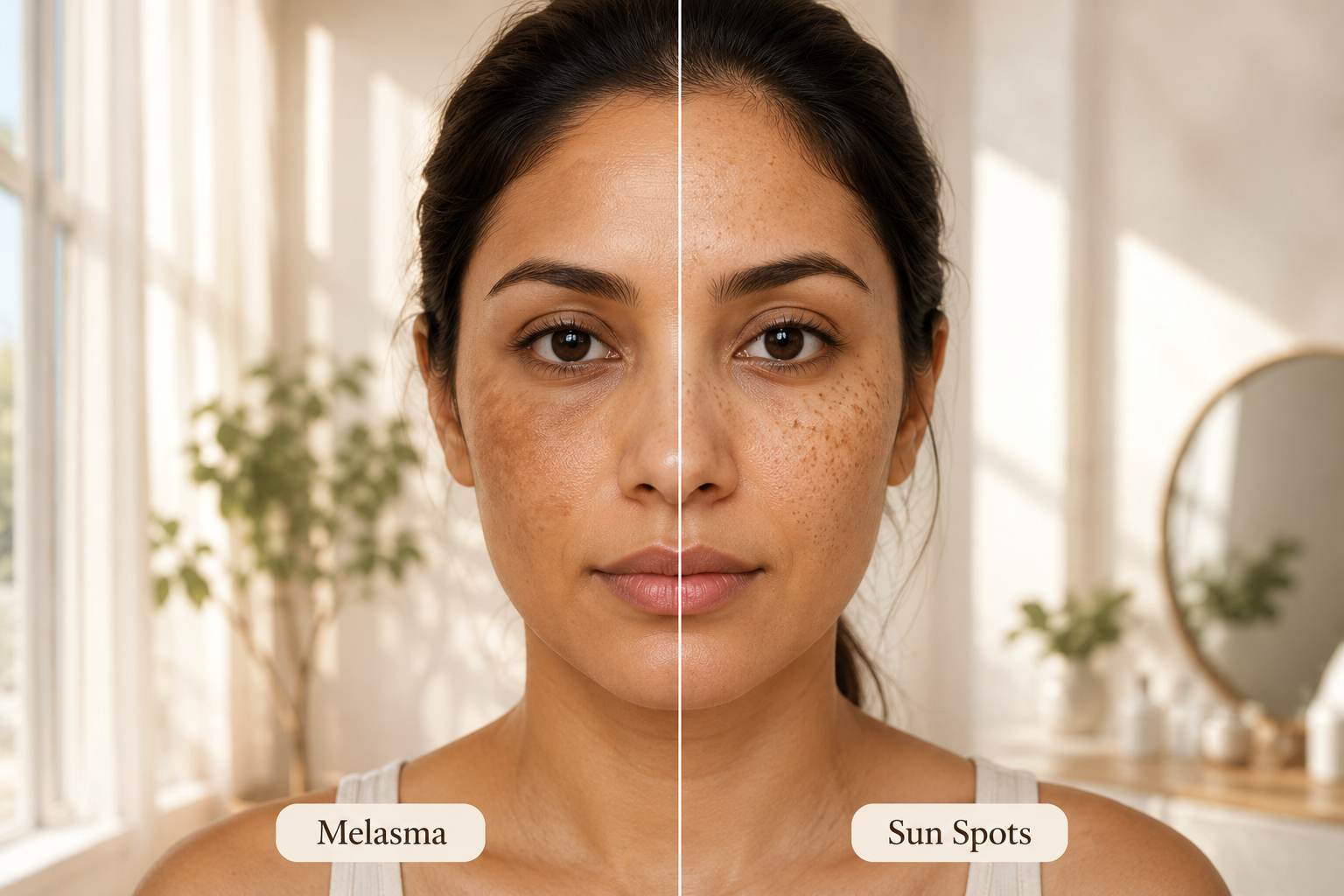
Sun spots, medically called lentigines, are flat brown or tan patches caused by years of cumulative UV exposure. They tend to appear on areas that see the most sun — the face, the backs of the hands, the shoulders — and they’re usually well-defined, meaning you can trace a clear edge around each spot. They don’t fade and darken with hormones or seasons the way melasma does; once they’re there, they’re there until treated.
What Is Melasma?
Melasma shows up differently. Instead of small, distinct spots, it usually appears as larger, symmetrical patches — often across the cheeks, forehead, or upper lip, mirrored on both sides of the face. It’s frequently linked to hormonal shifts (pregnancy, birth control, thyroid changes), which is why it’s sometimes called the “pregnancy mask.” Melasma is also uniquely stubborn: it can lighten in winter and resurface the moment sun exposure or hormone levels shift, which makes it the pigmentation type most likely to frustrate patients who’ve tried and failed with generic treatments.
Melasma vs Sun Spots — Quick Comparison
| Sun Spots (Lentigines) | Melasma | |
| Cause | Cumulative UV exposure | Hormonal changes, often sun-triggered |
| Appearance | Small, well-defined patches | Larger, symmetrical patches |
| Common areas | Face, hands, shoulders | Cheeks, forehead, upper lip |
| Who’s typically affected | Anyone with sun exposure over time | More common in women, especially during hormonal shifts |
| Recurrence risk | Low, once treated | Higher — needs ongoing management |
Why the Distinction Actually Matters for Treatment
Sun spots generally respond well to laser-based treatments like Q-Switch laser toning or Pico laser, which break down the concentrated pigment directly. Melasma is more sensitive — the same aggressive laser approach that clears a sun spot can actually inflame melasma and make it worse. Melasma typically responds better to a slower, more controlled approach: options like Cosmelan or a series of chemical peels, combined with strict sun protection, tend to produce steadier, safer results.
How URSA Diagnoses Which One You Have
At URSA, every pigmentation consultation starts with a proper skin analysis rather than a treatment sold off a menu. A dermatologist examines the pattern, depth, and distribution of the pigmentation — sometimes with a dermatoscope — to confirm whether you’re dealing with melasma, sun spots, or a combination of both, before recommending a plan. [Link to: Pigmentation Treatment page]
Frequently Asked Questions
Can you have both melasma and sun spots at the same time?
Yes — it’s actually fairly common, especially in adults with years of sun exposure plus a hormonal trigger. This is exactly why a proper diagnosis matters more than guessing from a mirror.
Which one is harder to treat?
Melasma. Sun spots typically respond well to a single course of treatment. Melasma tends to need a longer, more gradual protocol and ongoing sun protection to keep it from returning.
If your pigmentation doesn’t fit neatly into either description, or you’re not sure which one you’re dealing with, that’s precisely what a dermatologist consultation is for. Book a skin analysis at either URSA clinic in Gurgaon to get a treatment plan built around what’s actually on your skin.